


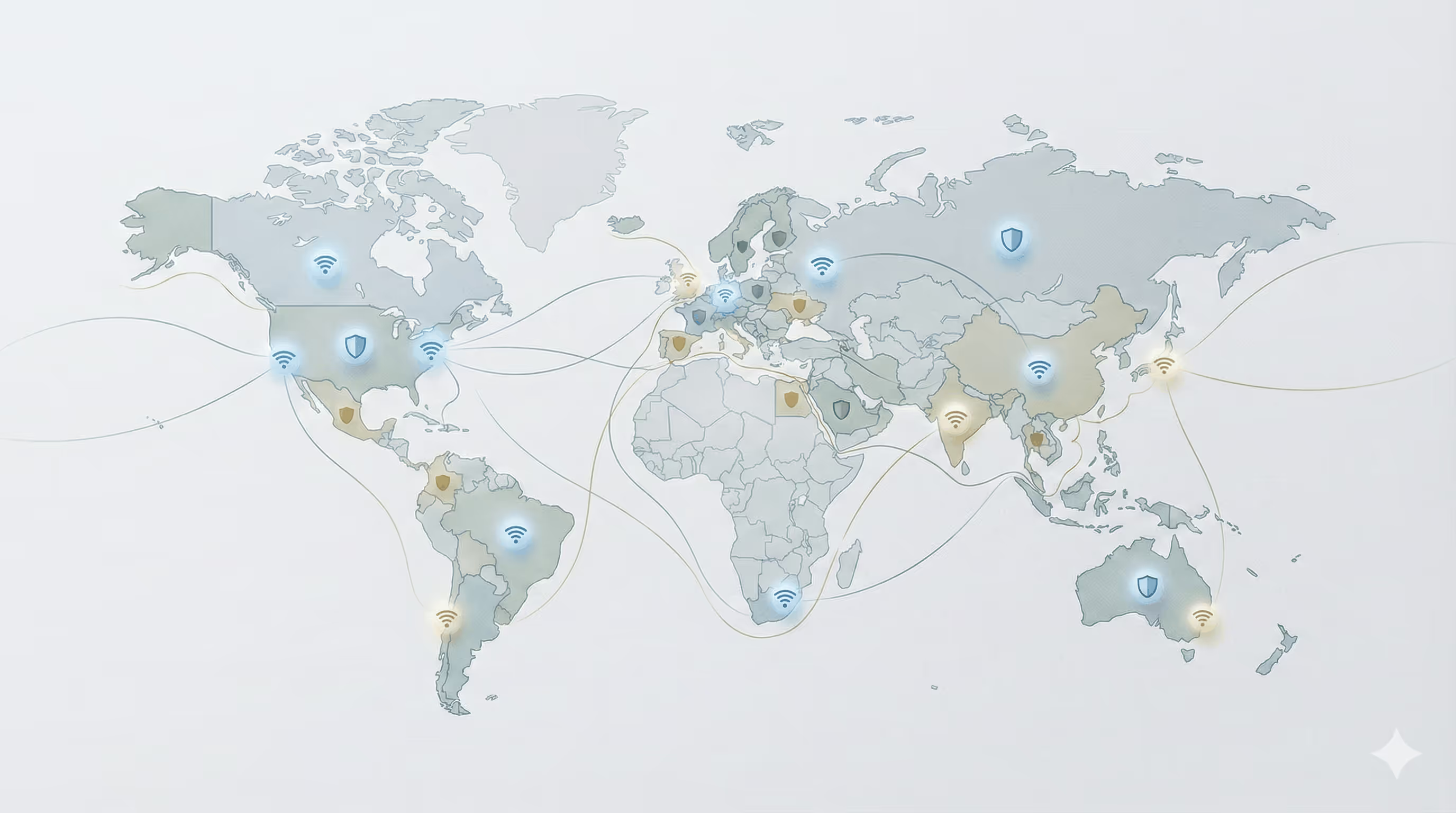
es is the retention period and whether the data is allowed to leave the country at all. Two jurisdictions make that second point a hard blocker.
The moment someone joins your guest WiFi you are processing personal data, before they have typed anything. IP address, MAC address, timestamp, session length. Add a splash page form and you add emails, phone numbers, and names. That is enough to put a café under the same privacy law as a bank.
Compliance for guest WiFi is unusually concentrated, which is the good news. Almost all of it happens on one screen, and almost all of it is configuration rather than legal work. Set the consent screen and the retention period correctly per site and you have covered most of what any regulator will ask about.
The exception is data residency. Consent wording can be adjusted and retention periods can be changed, but if a country requires guest data to stay inside its borders and your provider cannot host there, no amount of configuration fixes it. That is a question to settle before you sign a contract, not after.
Here is what each jurisdiction requires, and what to do about it.
What Your WiFi Network Collects
Every WiFi connection generates metadata automatically: IP addresses, MAC addresses, timestamps, session duration, and access point identifiers. This happens whether you configure anything or not. It's how networks work.
Your splash page adds whatever you ask for: email, phone number, name, room number, loyalty ID. And separately, you're logging whether users opted into marketing communications.
One legal point that matters: the venue is the data controller (legally responsible), while the captive portal provider is the processor (handles data on your behalf). Venues bear ultimate liability. That's why getting configuration right matters.
European Union: GDPR Compliance Starts at the Splash Page
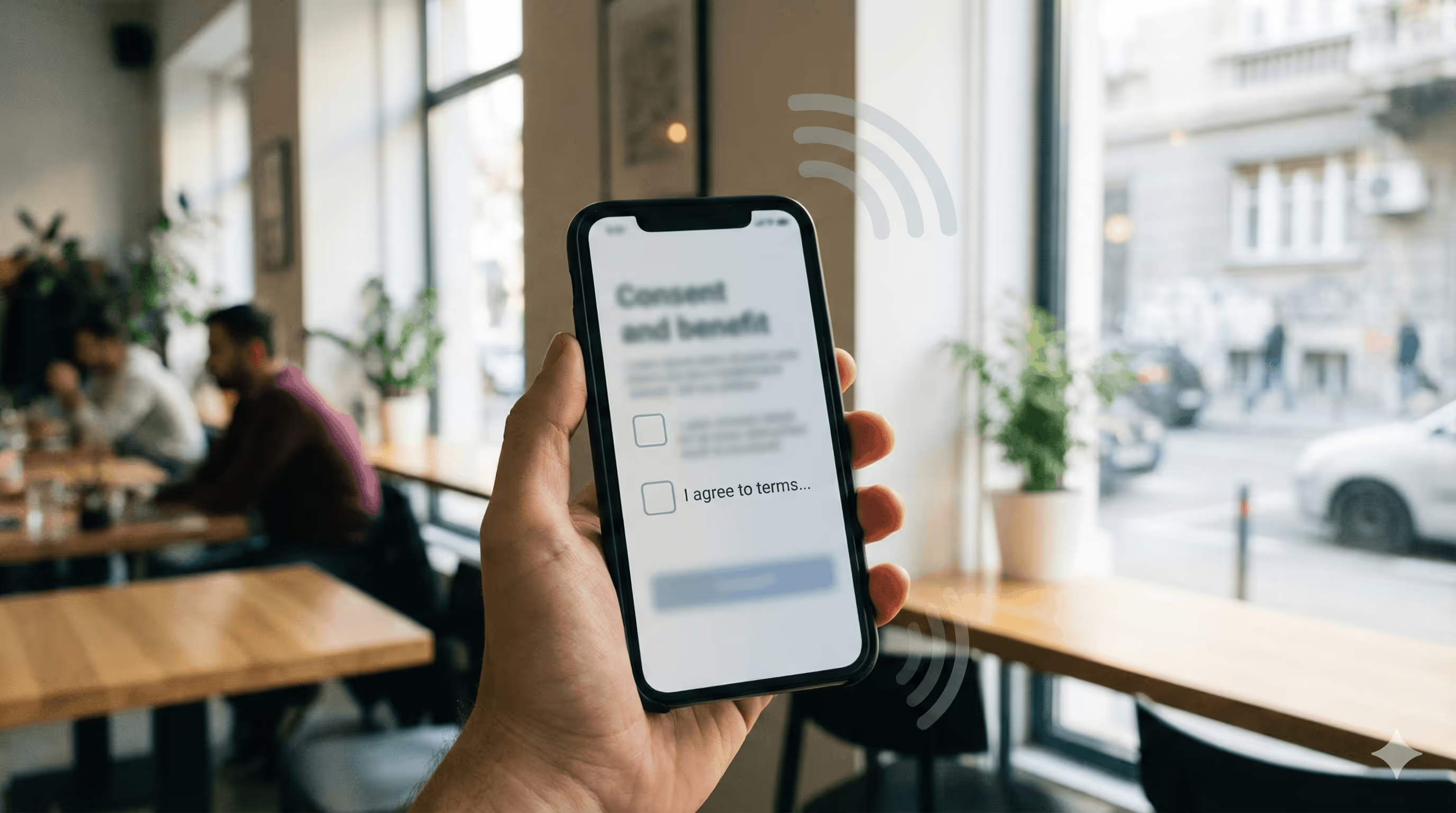
GDPR doesn't ban data collection. It requires transparency and valid consent. Your splash page is the perfect place to deliver both.
Consent must be freely given, specific, and unambiguous. No pre-ticked checkboxes. Marketing consent must be separate from WiFi access terms. A dedicated GDPR consent screen before the login form handles this cleanly. It shows what you collect, why, how long you keep it, and links to your privacy policy. Users actively proceed; nothing auto-advances.
For marketing, add an unticked checkbox separate from the Terms of Service. Your splash page logs both consent states with timestamps. That's your audit trail if regulators come asking.
Data minimization matters too. If you only need email addresses for marketing, don't also demand phone numbers and birthdays. Only collect what you'll actually use. For venues that don't need contact data at all, a simple click-through login works. Users accept the Terms of Service and get online without entering any personal information.
The Retention Complication

Here's where GDPR gets tricky. The regulation says minimize: keep data only as long as necessary, then delete. But national telecom laws in many EU countries require "access providers" to retain connection logs for law enforcement, sometimes up to 12 months.
These retention laws provide a "legal obligation" basis under GDPR Article 6(1)(c). If French rules require 12-month log retention, that's your lawful basis, but only for connection metadata. Marketing data still follows standard GDPR minimization, which means regular purges of inactive subscribers.
In practice, EU venues need two retention schedules: one for connection logs (30 days to 12 months depending on the member state), and one for marketing databases (purge inactive contacts, maintain consent evidence throughout). Penalties for getting this wrong can reach €20 million or 4% of global turnover.
United Kingdom: Same Framework, Longer Retention
UK GDPR mirrors EU requirements for consent and transparency. The key difference is retention: UK communications regulations can require connection data to be kept for approximately 12 months to support serious-crime investigations. Your splash page approach stays the same with the GDPR consent screen and separate marketing checkbox, but plan for longer log retention and ensure you can export audit-ready logs if law enforcement requests them.
United States: State Laws Are Multiplying

No federal WiFi privacy law exists, but state regulations are proliferating. California's CCPA/CPRA leads the pack; Colorado, Virginia, Connecticut, and Utah have similar frameworks.
These laws require you to inform users what categories of personal information you collect and why. Users get the right to access their data and request deletion. If you use WiFi data for targeted advertising or share it with ad networks, users must be able to opt out. That means your splash page needs a "Do Not Sell/Share My Personal Information" option in applicable states.
The practical solution is geo-aware splash pages that display state-specific notices based on venue location. California users see CCPA language; other states see appropriate disclosures. Your system also needs to support data export and deletion requests. CCPA gives users 45 days to receive their information. Penalties run several thousand dollars per person per incident.
Brazil: LGPD Follows the Same Playbook
Brazil's LGPD mirrors GDPR's structure: legal basis required, data minimization, transparency, and full data-subject rights, including portability. If you've already set up GDPR-compliant splash pages, the same approach works here with Portuguese language support. LGPD doesn't prescribe specific retention periods, so document your own policy and stick to it. Fines can reach a percentage of Brazilian turnover.
Canada: Plain Language Consent
PIPEDA requires "meaningful consent" explained in clear, plain language. No legal jargon buried in endless terms. Quebec's Law 25 adds stricter rules approaching GDPR levels. Canadian regulators have specifically flagged WiFi payload inspection as problematic, so stick to connection metadata and user-supplied fields. Keep data only as long as needed, then securely delete or anonymize.
Australia: Two-Year Retention for Telecom Providers
Australia's telecommunications data retention regime stands out. Public WiFi operators that qualify as carriage service providers, or those that partner with telcos, may need to retain subscriber identifiers, IP allocations, and timestamps for at least two years.
If you're in scope, that means 24-month minimum retention for connection logs, with audit-ready exports available: subscriber ID, session start/end times, IP allocation, access point. Marketing data follows standard Australian Privacy Principles. Keep only what's necessary with easy opt-out mechanisms.
Middle East: Data Localization Is Non-Negotiable
UAE and Saudi Arabia have adopted GDPR-inspired data protection laws, but with a critical addition: strict data localization requirements. UAE stored-value facility rules require customer data retained for at least five years. Some GCC states require traffic data tied to critical infrastructure to stay in-country indefinitely.
This is where your captive portal provider's infrastructure matters. UAE venue data must stay in UAE data centers. No cross-border transfers, no exceptions. If your provider can't guarantee region-locked hosting, you can't serve these markets compliantly. Five-year retention minimums are common, and some regimes add criminal sanctions for severe breaches.
Southeast Asia: Vietnam's Indefinite Storage Requirement
Singapore, Malaysia, Indonesia, the Philippines, and Thailand share GDPR-style principles: lawful basis, clear notices, security safeguards, and deletion rights. A well-configured GDPR splash page works as a safe baseline across most of the region.
Vietnam is the exception. Its Cybersecurity Law requires certain telecom or internet service providers to store Vietnamese users' personal data in Vietnam, sometimes indefinitely. That means local-only hosting with no data export outside the country. Indonesia's PDPL allows fines up to 2% of annual turnover plus criminal sanctions, so take compliance seriously across the region.
Ready to see compliant WiFi in action? Spotipo's GDPR consent screens, configurable retention, and CRM integrations handle compliance automatically. Start your free 14-day trial (https://app.spotipo.com/onboard/email/verification/).

Industry-Specific Considerations
Hospitality: Hotels, cafés, and retail venues typically want email collection for marketing. The key is keeping marketing consent separate from WiFi access, then integrating with your CRM to auto-export only consented contacts. Spotipo connects directly to Mailchimp, HubSpot, and Klaviyo. Some countries treat hotels as "access providers" with telecom retention obligations, so check local rules before assuming short retention is fine.
Healthcare: If WiFi login links to patient identity or medical systems, HIPAA (US) and health-data rules (EU) apply. The safest approach is often anonymous access through voucher-based or clickthrough login that doesn't collect patient identifiers at all. If you must link WiFi to patient systems, expect stronger safeguards: role-based access, hardened audit logs, strict data minimization.
Education: School and university WiFi often involves minors, triggering FERPA (US) and child-specific GDPR guidance. An age consent screen before login helps, and parental consent workflows may be required. Username/password login tied to school accounts provides accountability without collecting additional personal data.
Transport: Airports and transit hubs face security rules that may require user identification through SMS verification or ticket ID validation. Log retention often extends longer for counter-terrorism compliance. GDPR applies extraterritorially whenever EU citizens connect, so per-site rules based on venue location help manage this complexity.
Don't Forget Accessibility
EU, UK, US, Canada, and Australia all have accessibility laws covering public-facing digital services, including WiFi splash pages. WCAG standards require keyboard navigation, screen reader support, proper contrast ratios, and ARIA labels. Use built-in templates rather than custom designs unless you can verify accessibility compliance. Avoid CAPTCHAs that rely on vision or motion.
Managing Multiple Clients Across Regions
For MSPs and ISPs managing WiFi across multiple venues, compliance complexity multiplies. Each client may need different consent language, retention periods, and hosting locations.
The solution is per-site configuration with regional templates. Set up a GDPR template for EU clients, a CCPA template for California clients, and apply them as you onboard new sites. White-label support lets you brand each client's splash page while managing all sites from one dashboard. Tenant-level data isolation ensures one client's data never mixes with another's. For more on enterprise captive portal deployment, see our Guest WiFi Captive Portal Guide for Enterprise IT Teams (https://www.spotipo.com/post/guest-wifi-captive-portal-guide-what-enterprise-it-teams-need-to-know-in-2026).
Setting Up Compliant WiFi That Actually Works

GDPR Consent Screens: Dedicated pre-login screens that display data collection purposes, retention periods, and privacy policy links. Users must actively proceed. Spotipo includes this as a configurable option per site.
Separate Marketing Checkbox: Unticked by default, separate from Terms of Service acceptance. Timestamps logged for audit trail. Consent status syncs to CRM integrations so you only email people who opted in.
Flexible Retention Settings: Configure per-site retention periods from 30 days to multi-year depending on regional requirements. Automatic purging when retention expires.
Data Export and Deletion: Search guest records by email, phone, or MAC address. Export or delete all matching data with one click. Handle GDPR and CCPA deletion requests within required timeframes.
Router Compatibility: Works with UniFi, MikroTik, Cisco Meraki, Aruba, Ruckus, TP-Link Omada, and 30+ other brands. No vendor lock-in means using whatever equipment you have or prefer.
White-Label for MSPs: Brand each client's splash page while managing all sites from one dashboard. Per-tenant data isolation keeps client data separate.
Frequently Asked Questions
Can I use the same splash page globally?
Not recommended. EU sites need GDPR consent screens. US sites need state-specific notices. Middle East sites need local hosting. Use regional templates and per-site configuration.
What if I don't want to collect any personal data?
Use a clickthrough login. Users accept Terms of Service without entering information. You still collect connection metadata (required for network operation), but compliance burden drops significantly.
How do I handle deletion requests?
Search by email, phone, or MAC address, then delete all matching records. GDPR requires response within one month. CCPA gives 45 days.
Who's liable: the venue or the portal provider?
Primarily the venue as data controller. Portal providers face liability for breaches caused by their failures. Clear Data Processing Agreements matter.
Do I need separate consent for WiFi access and marketing?
Yes, under GDPR and similar frameworks. WiFi access can require Terms of Service acceptance, but marketing must be a separate, unticked checkbox.
What's the minimum retention period?
Varies by jurisdiction. Some EU countries require 30+ days for connection logs. Australia can require 2 years. UAE can require 5 years. Vietnam can require indefinite. Check local telecom rules for your specific venues.
Best router for compliant guest WiFi?
UniFi works well for most deployments and integrates easily with Spotipo. MikroTik offers advanced features for MSPs. The captive portal matters more than the router for compliance.
The WiFi Compliance Reality
Compliant WiFi is invisible. Guests notice only when something goes wrong: a confusing consent screen, a deletion request that goes unanswered, a data breach that makes headlines.
Proper configuration prevents most problems: GDPR consent screens where required, separate marketing opt-in, appropriate retention periods, regional hosting for localization requirements, and data export capabilities for rights requests.
The business value goes beyond avoiding fines. Email capture with proper consent builds qualified marketing databases. CRM integrations automate follow-up campaigns. Analytics improve operations. And guests trust venues that respect their privacy.
Ready to deploy compliant guest WiFi? Start your free 14-day trial (https://app.spotipo.com/onboard/email/verification/) and see what WiFi compliance looks like when the infrastructure handles it automatically.


