


.avif)
TL;DR: Event WiFi requires enterprise-grade hardware that scales to 1,000+ concurrent users. UniFi Dream Machine Pro works for most events (controller + routing + switching in one device). Larger deployments need Cisco Meraki, Aruba Central, or Ruckus SmartZone. Budget for 1 AP per 50-75 users, cellular backup, and PoE switches. Cloud-managed systems like Spotipo work with 30+ router brands, eliminating vendor lock-in.
Picking the wrong WiFi hardware for events means discovering your network can't handle the load when 500 people try to connect simultaneously.
This guide covers what actually works - from routers that scale to authentication systems that don't collapse under concurrent connection surges.
Why Event Hardware Differs
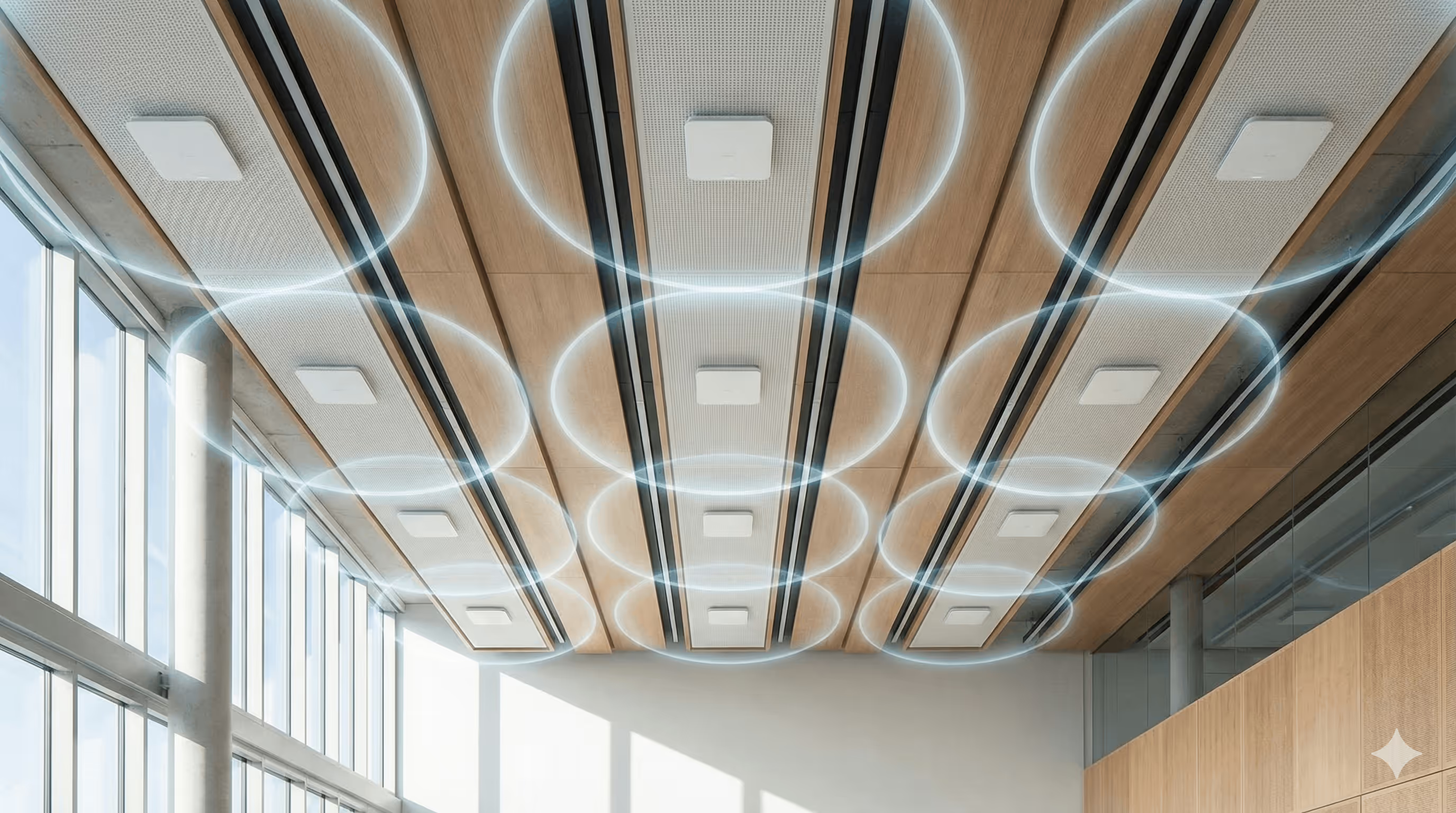
Consumer WiFi serves 20-30 devices. Business WiFi handles 50-100 concurrent users across an 8-hour workday. Event WiFi manages 500+ users connecting in the first 15 minutes, all hitting the captive portal simultaneously.
The hardware architecture determines whether your network survives opening rush or becomes the reason attendees complain on social media. Enterprise systems handle thousands of concurrent connections. Consumer routers crash under event load.
Router Systems That Actually Scale
UniFi (Ubiquiti) - Best for Most Events

UniFi Dream Machine Pro combines controller, routing, and switching in one portable device. Setup with Spotipo takes roughly 30 minutes if you've configured it before.
Dream Machine handles up to 3,500 devices theoretically. Real-world deployments comfortably support 1,000-1,500 concurrent users. Add switches and APs when crowds exceed 5,000 concurrent connections.
Cloud Key and UDM systems provide centralized management without hauling servers to venues. Configure remotely, monitor in real-time, troubleshoot from anywhere.
UniFi covers 95% of Spotipo customers. The ecosystem offers weather-resistant outdoor APs, high-density conference APs, and flexible mounting - everything events need.
Setup requirements:
- UniFi Controller (Cloud Key, UDM, or software-based)
- Internet-accessible 24/7 during event
- Spotipo integration via direct connection or reverse proxy
Trade-offs: Works brilliantly for events up to 5,000 concurrent users. Larger festivals might need enterprise systems.
MikroTik - For Technical Teams
MikroTik RouterOS delivers powerful features at significantly lower costs than UniFi or enterprise systems. The catch: configuration demands networking expertise.
MSPs managing multiple event clients love MikroTik. Template the configuration once, deploy consistently across different venues. Advanced bandwidth management and QoS policies provide granular control over traffic shaping and user policies.
RouterOS 7 and 8 support WireGuard VPN, enabling more secure connections between Spotipo's cloud portal and your router.
Price point makes it attractive for MSPs deploying across dozens of events annually. MikroTik systems cost 40-60% less than equivalent UniFi infrastructure.
Trade-offs: Configuration complexity means longer setup. Not ideal for teams without networking expertise or events requiring rapid deployment.
Cisco Meraki - Enterprise Reliability
Meraki Go serves small to medium events (500-2,000 attendees). Meraki MX and Meraki Access Points handle larger deployments. Cisco WLC 9800 powers large-scale events requiring 10,000+ concurrent connections.
Cloud-managed infrastructure means configuring splash pages, adjusting policies, and monitoring from anywhere. Existing Cisco infrastructure at corporate venues makes Meraki the natural choice. Support contracts guarantee response times for mission-critical events.
Trade-offs: Higher licensing costs than UniFi or MikroTik. Enterprise clients value the reliability and support structure.
Aruba (HPE) - Large Event Specialists
Aruba Instant On handles small to medium events. Aruba Central manages large-scale deployments across multiple venues. Aruba IAP (firmware 6.5+) integrate seamlessly with Spotipo - APs form virtual controller cluster automatically.
Large festivals and corporate conferences leverage AI-powered RF optimization, automated troubleshooting, and predictive analytics. Proven reliability at massive scale - major music festivals and convention centers trust Aruba infrastructure.
Trade-offs: Enterprise pricing matches enterprise features. Perfect for large deployments where network failure carries significant reputation risk.
Ruckus - Performance Focus
Ruckus SmartZone manages campus-scale deployments. Ruckus Unleashed provides controller functionality built into APs. Ruckus Zone Director suits medium events requiring centralized management without cloud dependency.
BeamFlex technology adapts antenna patterns in real-time as crowds move. Superior RF performance in challenging environments with metal structures, dense crowds, and interference.
Trade-offs: Less ecosystem integration than UniFi. Requires networking knowledge. Strong choice when WiFi performance is paramount.
TP-Link Omada - Budget-Conscious Quality
Omada SDN Controller offers cloud management at price points between consumer and enterprise equipment. Scales reasonably to medium events (2,000-3,000 concurrent users). Integration with Spotipo provides professional captive portal without enterprise licensing costs.
Other Supported Systems
Fortinet Firewalls integrate with Spotipo for events requiring enterprise security features. RADIUS authentication and granular bandwidth control suit corporate environments with strict security policies.
Cambium cnMaestro, Mist Access Points, Draytek, Zyxel Nebula, Teltonika, and Ruijie routers all integrate with Spotipo's captive portal system. The platform's router-agnostic architecture prevents vendor lock-in.

How Many Access Points Do Events Need?
Hardware capacity matters less than AP distribution. One high-capacity router means nothing if access points can't handle user density.
Quantity formula: 1 AP per 50-75 users
Real-world application: 1,000-person conference needs 14-20 access points. Large festival with 5,000 concurrent users requires 70-100 APs distributed across the venue.
Essential AP features for events:
5GHz band support: Handles higher throughput with more non-overlapping channels (36, 40, 44, 48, 52, 56, 60, 64) than 2.4GHz. Minimize 2.4GHz for high-density.
High-density mode: Prevents slow devices from monopolizing capacity. Critical for conferences with various device generations.
Weather resistance: IP65 or IP67 ratings for outdoor festivals. Handle temperature swings, moisture, and dust.
PoE (Power over Ethernet): Run single cables instead of separate power and network. PoE+ (802.3at) delivers 25.5W. PoE++ (802.3bt) provides 51-73W for outdoor APs.
Fast roaming (802.11r): Seamless handoff between APs for moving crowds.
What Infrastructure Do You Need Beyond Routers?
Internet Connectivity
Calculate minimum bandwidth: attendees × devices per person × Mbps per user × 1.4 (40% headroom). Example: 3,000-person festival with 1.2 devices per person at 6 Mbps = 30.2 Gbps required.
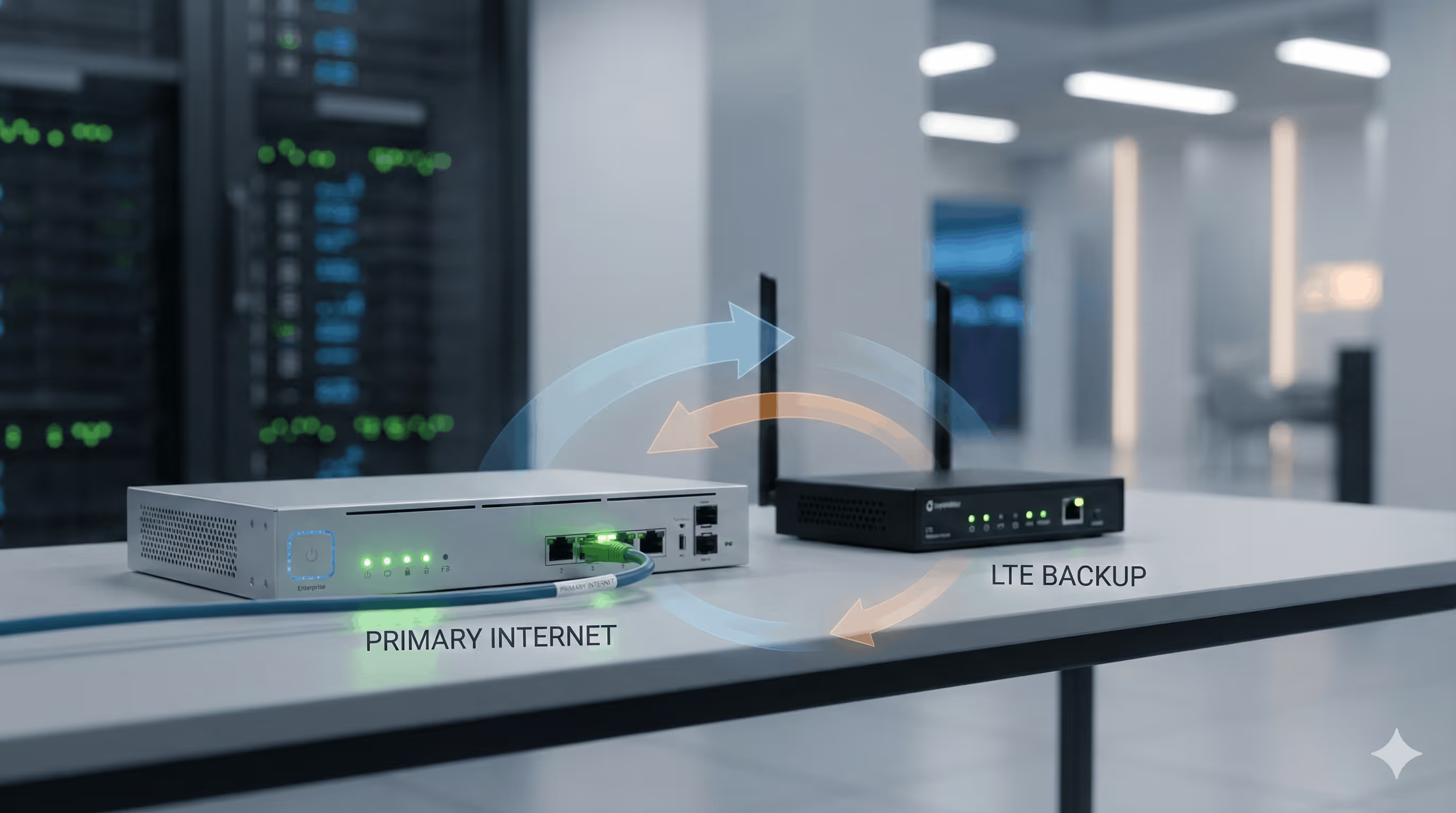
Primary circuit from venue plus cellular LTE backup with automatic failover isn't optional. Outdoor venues have unreliable wired internet. LTE routers (Cradlepoint, Peplink) provide automatic failover. Budget $500-1,500 for equipment plus data plans.
Switching Infrastructure
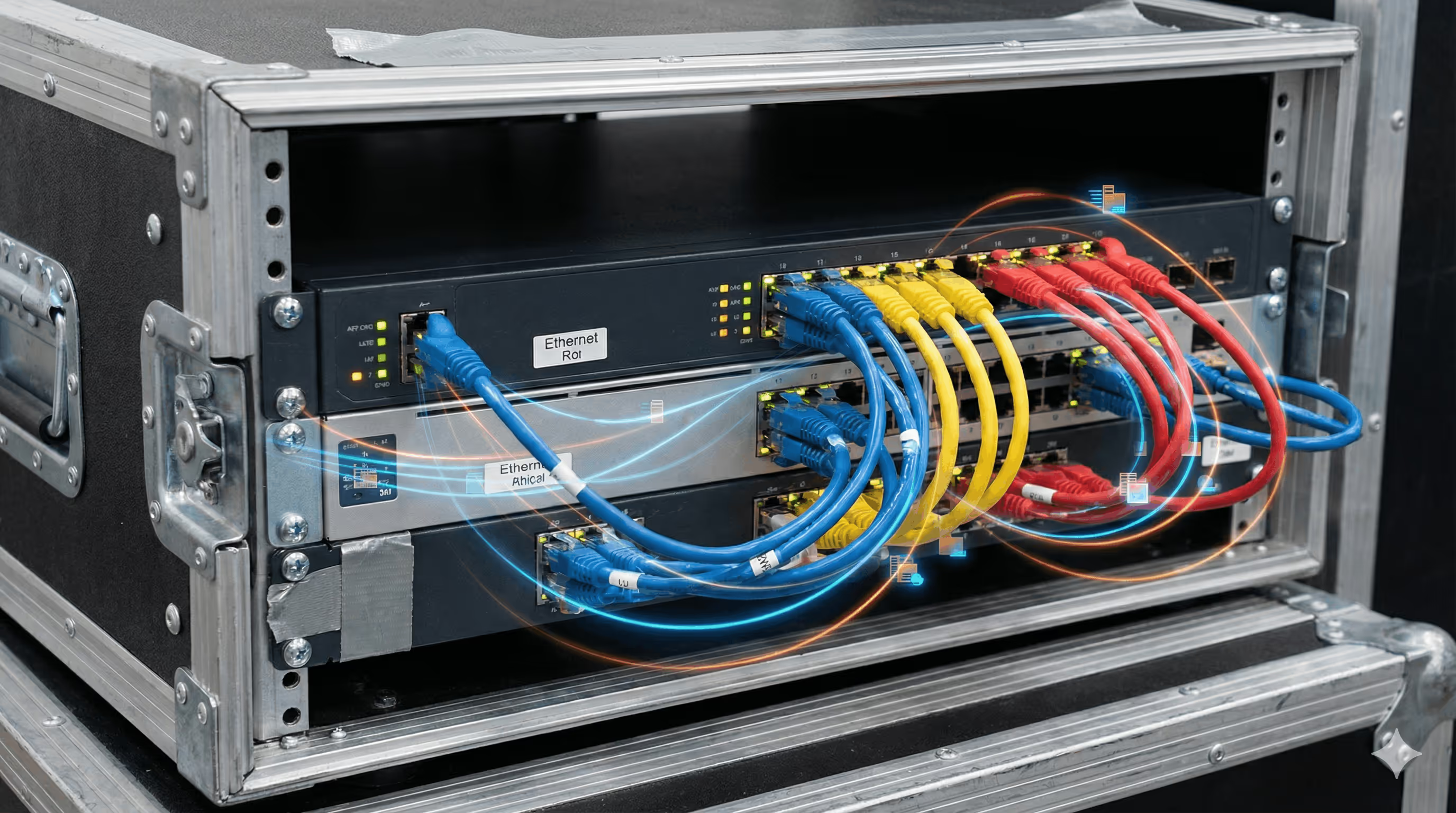
Managed PoE switches power access points and enable VLAN segmentation. Calculate port count: APs + uplinks + management + 20% spare capacity.
PoE budget matters: each AP draws 15-30W. 24-port switch with 370W budget powers roughly 15-20 standard APs. Stacking capability simplifies management when deploying 100+ APs across large venues.
Mounting Solutions
Conference halls: Ceiling mounts or weighted poles. Position APs above seating with overlapping coverage, not perimeter-only.
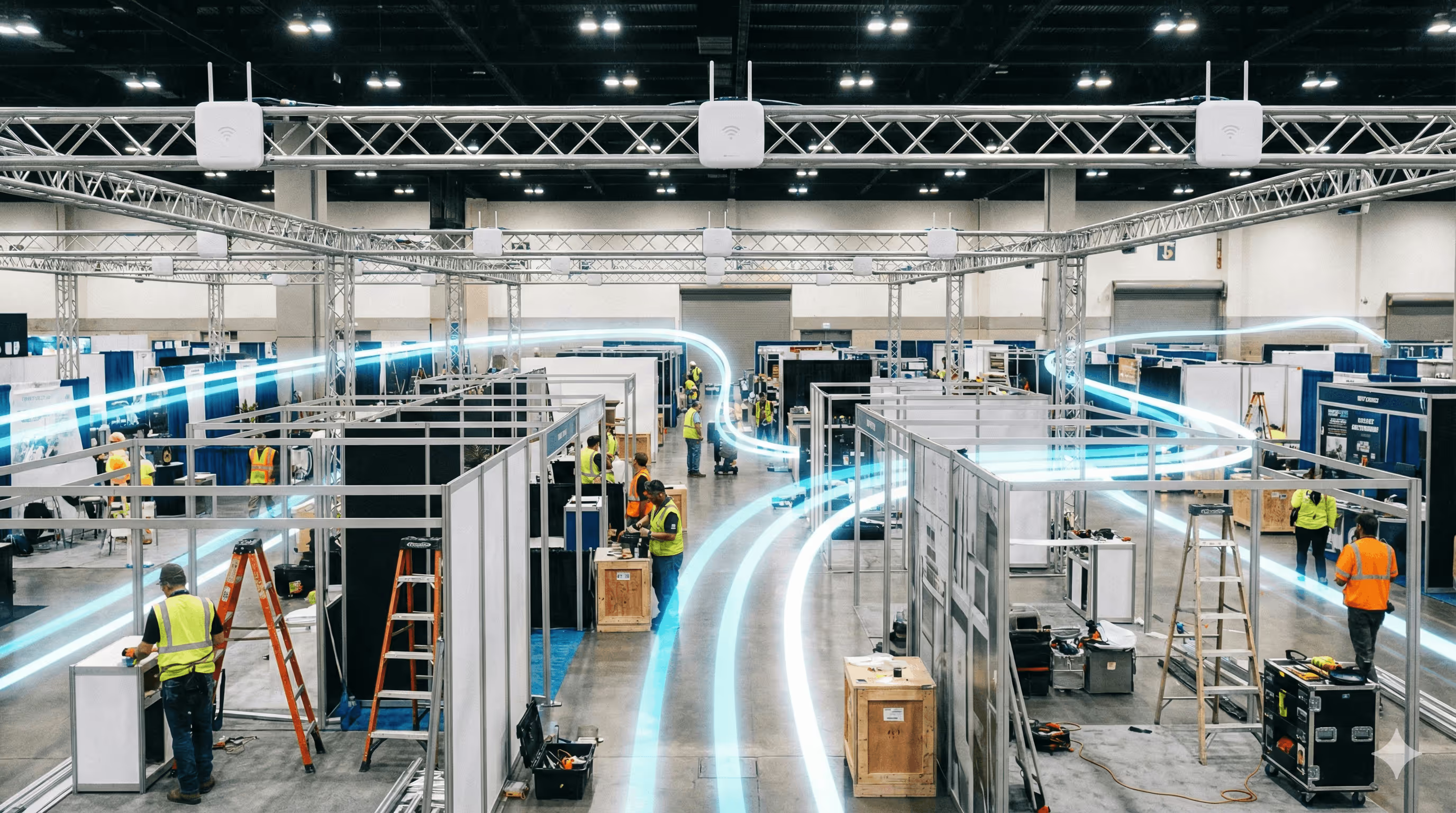
Trade show floors: Truss-mounted APs at booth intersections. Metal structures block signals.
Outdoor festivals: Weather-resistant equipment on 10-15 foot poles. Guy wires or weighted bases prevent wind damage.
Exhibition centers: Coordinate with venue on rigging points. Many prohibit drilling - use magnetic or weighted mounts.
Controller Architecture: Cloud vs On-Premise
Cloud controllers enable remote configuration without hauling servers to venues. Configure networks before arriving, troubleshoot remotely. Trade-off: if venue internet fails, management fails.
On-premise controllers provide local management independent of internet. Network keeps working even if venue internet dies. Critical for mission-critical events.
Hybrid approach: cloud controller plus local backup. Switch to backup if venue internet fails. Worth the complexity for high-stakes events.
Captive Portal Integration
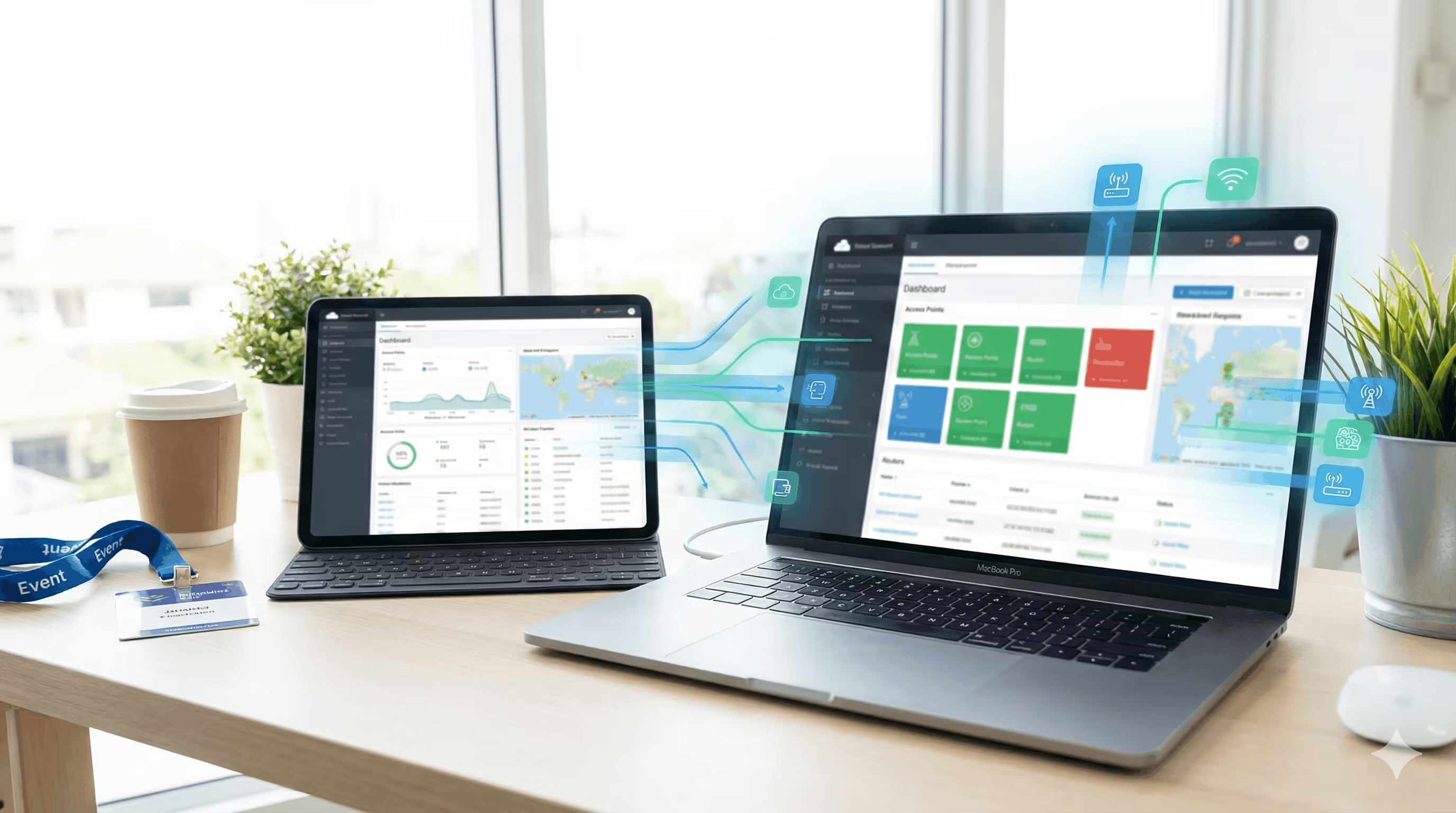
Hardware alone doesn't create professional event WiFi. Captive portal systems like Spotipo transform basic connectivity into lead generation and revenue opportunities.
Cloud-based portals deploy in under an hour. Connect your router (UniFi, MikroTik, Cisco, Aruba, or 30+ other brands), configure splash page, authenticate attendees immediately.
Key features: Email capture syncs to Mailchimp, Klaviyo, or HubSpot automatically. Voucher systems create tiered access (4-hour codes for attendees, 72-hour for exhibitors, unlimited for VIP). Multi-event management handles simultaneous deployments. Sponsor-branded splash pages deliver guaranteed impressions.
Hardware Selection by Event Size
Small Events (500-2,000 attendees):UniFi Dream Machine Pro + 4-8 APs + 24-port PoE switch + LTE backup. Cost: $3,000-5,000.
Medium Events (2,000-5,000 attendees):UniFi or Omada system + 8-20 APs + 2-3 switches + redundant internet. Cost: $8,000-15,000.
Large Festivals (5,000-15,000 attendees):Enterprise system (Aruba/Cisco/Ruckus) + 20-60+ APs + distributed switching + multiple circuits. Cost: $25,000-75,000+.
Common Hardware Mistakes
Underspeccing APs: Too few access points for user density creates overloaded APs and connection failures.
Consumer-grade equipment: Residential routers crash when 500 people connect simultaneously.
Single points of failure: No backup internet or redundancy means total network failure when something breaks.
Wrong AP types: Indoor APs at outdoor events. Standard APs in high-density halls. Equipment must match environment.
Ignoring PoE budget: Calculate total wattage requirements before purchasing switches.
Testing Requirements
Visit venue 24 hours before doors open. Set up representative network portion. Test complete user journey from actual attendee locations.
Verify concurrent user capacity with traffic simulation tools like iPerf. Test authentication under simulated load - confirm your router handles 1,000+ concurrent requests. Check failover by disconnecting primary internet and verifying cellular backup activates automatically.
Frequently Asked Questions
What router system works for most events?UniFi Dream Machine Pro handles 95% of event deployments (500-5,000 concurrent users). Combines controller, routing, and switching. Larger festivals need enterprise systems like Aruba Central or Cisco Meraki.
How many access points do I need for my event?Plan for 1 AP per 50-75 users. 1,000-person conference needs 14-20 APs. 5,000-person festival requires 70-100 APs. Distribute based on actual user density, not just formulas.
Should I use cloud or on-premise controllers?Cloud controllers enable remote configuration without servers. Trade-off: venue internet failure kills management. Mission-critical events need hybrid - cloud plus local backup.
What's the minimum budget for event WiFi hardware?Small events (500-2,000): $3,000-5,000. Medium (2,000-5,000): $8,000-15,000. Large festivals (5,000-15,000): $25,000-75,000+.
Can I use the venue's existing WiFi equipment?If venue uses UniFi, MikroTik, Cisco, Aruba, or any of 30+ brands Spotipo supports, yes. Test capacity beforehand - venue WiFi often can't handle event-scale loads.
Which router brands does Spotipo support?30+ brands including UniFi, MikroTik, Cisco Meraki, Aruba, Ruckus, TP-Link Omada, Fortinet, Cambium, Mist, Draytek, Zyxel, Teltonika, and Ruijie.
Do I need backup internet for events?Yes, especially outdoor venues. Cellular LTE backup with automatic failover costs $500-1,500 plus data. Network failure damages event reputation.
What AP features matter most for events?5GHz support, high-density mode, PoE, weather resistance (IP65/IP67) for outdoor events, and fast roaming (802.11r) for moving crowds.
The Hardware Reality
Event WiFi hardware costs range from $3,000 for small events to $75,000+ for large festivals. The investment isn't optional - network failure during events damages reputation and attendee satisfaction.
Enterprise systems (Aruba, Cisco, Ruckus) cost more than prosumer equipment (UniFi, Omada) but provide reliability guarantees valuable for mission-critical deployments. For most events under 5,000 concurrent users, UniFi Dream Machine Pro delivers professional performance at reasonable cost.
Cloud-managed systems eliminate server hardware but create internet dependency. Router-agnostic captive portals like Spotipo prevent vendor lock-in - use whatever equipment the venue has or your preferred hardware. Switch between UniFi, MikroTik, and Cisco across different events without changing captive portal systems.
The right hardware foundation enables everything else: email capture that builds marketing databases, voucher systems that create tiered access, sponsor-branded portals that generate revenue. Hardware alone isn't enough, but without proper infrastructure, none of it works.
Ready to deploy professional event WiFi? Start your free 14-day Spotipo trial and see how the right hardware plus smart captive portal software creates WiFi that handles the load.


