


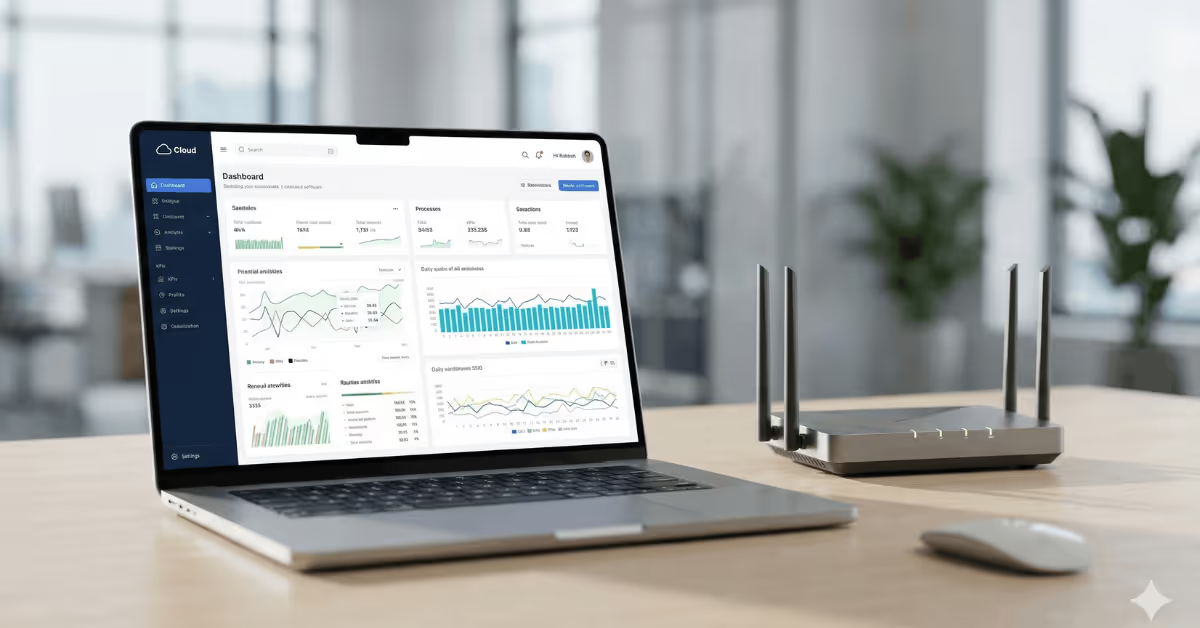
Managed service providers looking to grow predictable monthly income should consider guest WiFi as a service line. By deploying captive portal solutions across client locations, MSPs can generate $50 to $150+ per site per month in recurring revenue while deepening client relationships. This guide covers exactly how to build, price, and scale guest WiFi as an MSP revenue stream.
Why Are MSPs Looking Beyond Traditional IT Services?
The managed services market is growing fast, with the global MSP industry valued at over $400 billion in 2025 and projected to nearly double by 2033. But growth alone does not guarantee profitability. According to Datto's 2026 survey, 37% of MSP revenue still comes from monthly recurring services, with the rest split across consulting, project work, and break-fix. That means nearly two-thirds of revenue for the average MSP remains unpredictable.
Meanwhile, new customer acquisition is the top business challenge for 34% of MSPs, and 22% report having zero marketing budget. Competition is intensifying. Cybersecurity and cloud services dominate the conversation, but those markets are crowded. The MSPs that pull ahead are those that find complementary services that don't require hiring specialized staff or competing head-to-head with enterprise security vendors.
Guest WiFi services sit in a sweet spot: they're low-complexity, high-margin, and directly tied to a monthly billing model. More importantly, they solve a problem nearly every SMB client already has.
What Exactly Is Guest WiFi as a Managed Service?
Guest WiFi as a managed service means an MSP deploys, configures, and manages branded captive portal solutions across their clients' locations. Instead of offering an open network with no business value, the MSP sets up a system that captures guest data, displays branded splash pages, enables marketing automation, and can generate direct revenue through paid access tiers.
The MSP handles everything: router configuration, splash page design, marketing platform integration, monitoring, and reporting. The client pays a monthly fee. This is not about selling internet access. It's about turning existing WiFi infrastructure into a marketing and data collection channel.
Which Industries Need Managed Guest WiFi the Most?
Hospitality is the largest segment for captive portal adoption, accounting for more than 25% of the market by 2030 according to KBV Research. Hotels, restaurants, cafes, and event venues all need branded guest WiFi experiences that go beyond a simple password on a chalkboard.
But the opportunity extends well beyond hospitality. We regularly talk to MSPs serving surprisingly diverse verticals. One IT services company manages captive portals across 200+ buses for a European transport operator, each running Teltonika routers with MikroTik access points. Another MSP's cafe client needed paid WiFi after one free hour because tourists were buying a single coffee and occupying seats all day. These are not edge cases. They're the kinds of deals MSPs encounter constantly once they start offering guest WiFi.
Retail stores use captive portals to capture emails at scale and display promotions during login. Healthcare clinics need compliant guest access that keeps patient traffic isolated from clinical systems. Coworking spaces use guest WiFi to onboard visitors and offer tiered connectivity. A single retail chain with 20 locations can represent $1,000 to $3,000 in monthly recurring revenue for the MSP managing their guest WiFi.
How Do MSPs Actually Make Money with Guest WiFi?
There are several proven revenue models, and the best approach often combines two or more.
Monthly management fees
The most straightforward model charges clients a flat monthly fee per location for the captive portal platform, splash page management, reporting, and support. MSPs typically charge between $50 and $150 per location per month. An MSP with 50 managed locations at $75 per site generates $3,750 in monthly recurring revenue from WiFi services alone.
Revenue sharing from paid WiFi

For clients in hospitality or events where guests pay for premium WiFi access, MSPs can take a 10% to 25% revenue share. Consider a seasonal hotel where business travelers routinely pay $5 to $15 daily for faster speeds. Even a mid-sized property can generate meaningful premium WiFi income, and the MSP earns on top of the management fee without additional labor. Setting up paid WiFi tiers through Stripe takes minutes, not days.
Bundled service packages
Packaging guest WiFi with existing managed network services creates a stickier offering. A client paying $500 per month for network management might pay $650 when guest WiFi and analytics reporting are included. The incremental cost to the MSP is minimal.
Marketing services upsell
Once guest WiFi is capturing email addresses and phone numbers, MSPs can offer additional services: email automations, splash page campaigns, and WiFi upsell workflows that convert free users to paid plans. These carry high margins because they leverage data infrastructure already in place.
What Should MSPs Look for in a Guest WiFi Platform?
Not every captive portal solution is built for MSPs. Here are the non-negotiables:
Multi-site management from a single dashboard. MSPs need to manage dozens or hundreds of client locations without logging into separate accounts. The platform should support hierarchical access where the MSP sees everything and each client sees only their own data.
White-label capabilities. The captive portal, splash pages, invoices, and even the admin login should carry the MSP's branding or the end client's branding. This reinforces the MSP's value and prevents clients from bypassing the MSP to work directly with the platform vendor.
Broad router compatibility. Client environments are not standardized. The platform must work with the routers MSPs already deploy, including UniFi, MikroTik, Cisco Meraki, Aruba, Ruckus, TP-Link Omada, and others. Requiring firmware changes or proprietary hardware is a dealbreaker for most MSPs. We've watched MSPs lose deals over platform compatibility. One prospect runs UniFi at half their sites and Ruckus at the other half. If your captive portal platform only supports one, you've lost the deal before the demo.
Flexible login options. Different clients need different authentication methods: email capture, social login, SMS/OTP verification, voucher codes, paid access via Stripe, or simple clickthrough. The platform should support all of these without custom development.
Marketing integrations. Guest data has limited value if it stays locked in the WiFi platform. Native integrations with tools like Mailchimp, Klaviyo, HubSpot, Brevo, and Campaign Monitor allow MSPs to offer end-to-end guest engagement services.
GDPR and privacy compliance. Particularly for MSPs serving European clients, the platform must handle consent collection, data retention policies, and privacy regulation compliance out of the box.
Spotipo, for example, is a cloud-based captive portal platform built specifically for MSPs and ISPs. It supports 30+ router brands, offers full white-label branding (including custom admin login pages), provides native integrations with major email marketing platforms, and includes paid WiFi capabilities via Stripe. The white-label option runs $50 per month with an annual commitment, and standard partnership is month-to-month with no minimum commitment. We'll be upfront: if your primary selection criterion is the lowest possible per-location cost, there are cheaper options. But MSPs who've tried those tend to hit walls on router compatibility or white-labeling that cost more in lost deals than they save on platform fees.
How Do You Price Guest WiFi Services for Clients?
Pricing depends on three factors: the value delivered, the cost of the underlying platform, and your competitive landscape.
Cost-plus model: Calculate your per-site platform cost, add labor for setup and management, then apply your target margin. If your platform cost is $20 per site and setup takes two hours, pricing at $75 to $100 per site gives healthy margins after the first month.
Value-based model: For clients where guest WiFi generates revenue directly (hotels with paid tiers, retail with measurable email capture ROI), price based on value created. A hotel generating $1,500 per month in premium WiFi revenue will not hesitate at $150 for the managed service enabling it.
Bundled model: Include guest WiFi in your existing managed network package at a small premium. ScalePad's research shows that top-earning MSPs tend to have ARPU above $250 and offer a broader range of services to their clients.
What Does the Setup Process Look Like?
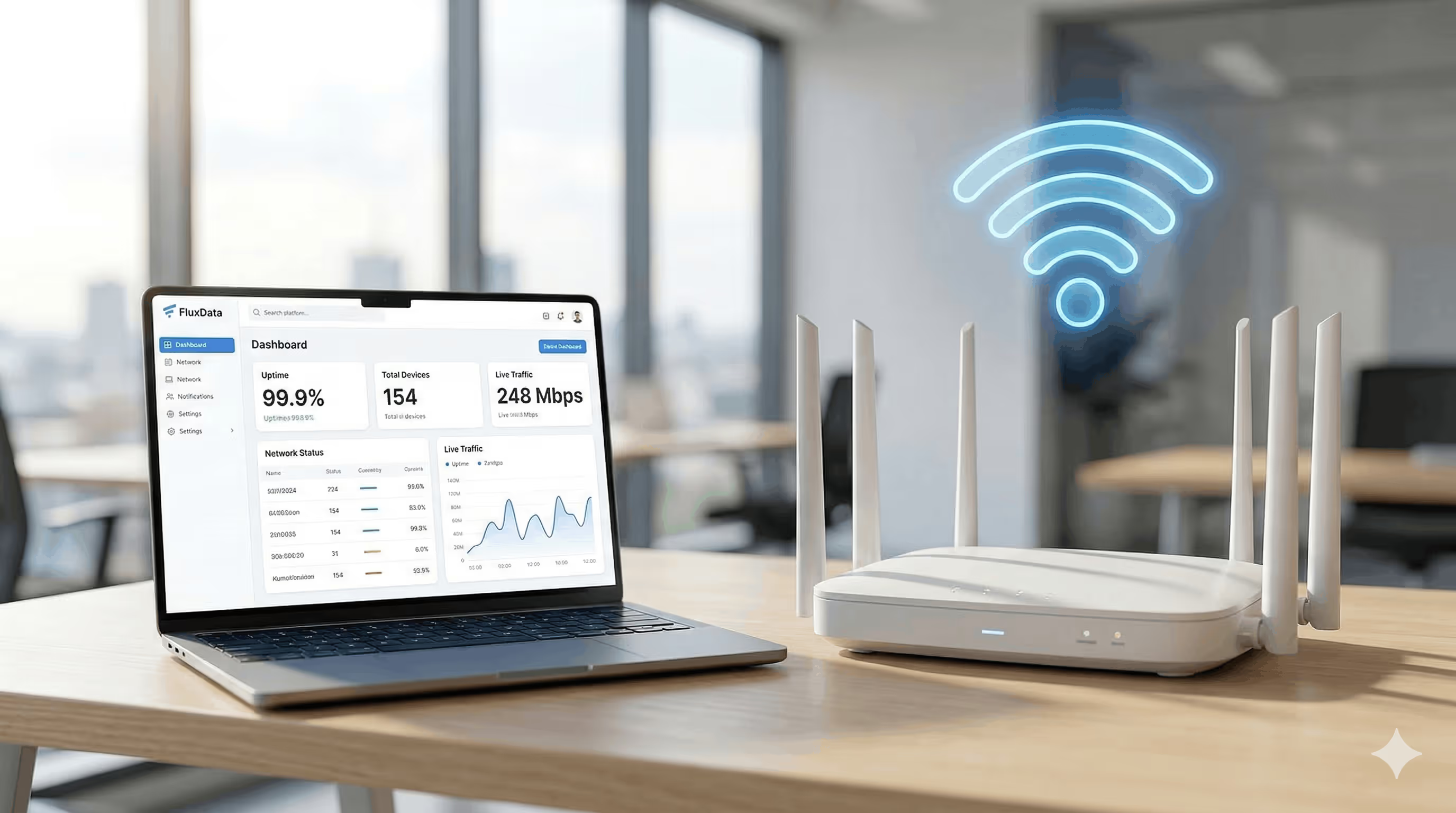
One of the reasons guest WiFi works well as an MSP service is the low implementation complexity compared to security or cloud migration projects.
Step 1: Audit the client's existing network. Identify the router hardware, current guest WiFi setup (if any), and the client's goals for guest data collection.
Step 2: Configure the captive portal platform. Create the client's account, design their branded splash page, set up the login method, and configure marketing integrations.
Step 3: Connect the router. Point the client's existing router to the cloud-based captive portal. With platforms supporting broad hardware compatibility, this typically requires changing a few settings in the router's controller. No firmware changes, no hardware swaps.
Step 4: Test and launch. Verify the portal appears correctly on mobile and desktop, confirm guest data flows into marketing tools, and test any paid access tiers. Most platforms offer a demo mode so you can test the full portal experience without touching the client's router.
Step 5: Deliver ongoing value. Provide monthly reports on guest connections and email captures. Proactively suggest splash page updates for seasonal promotions. This ongoing engagement justifies the monthly fee and keeps churn low.
For most client locations, the entire setup takes under two hours. The real margin comes from recurring management, not the initial deployment.
A note on what goes wrong. The most common first-deployment issue is the captive portal not appearing when guests connect to the network. This is almost always a firewall or DNS configuration problem on the router side, not a platform issue. UniFi firewall rules and MikroTik RADIUS configuration are the two setups MSPs most frequently need to troubleshoot. Building a checklist for these before your first deployment saves hours of back-and-forth later.
How Do MSPs Scale Guest WiFi Across Their Client Base?
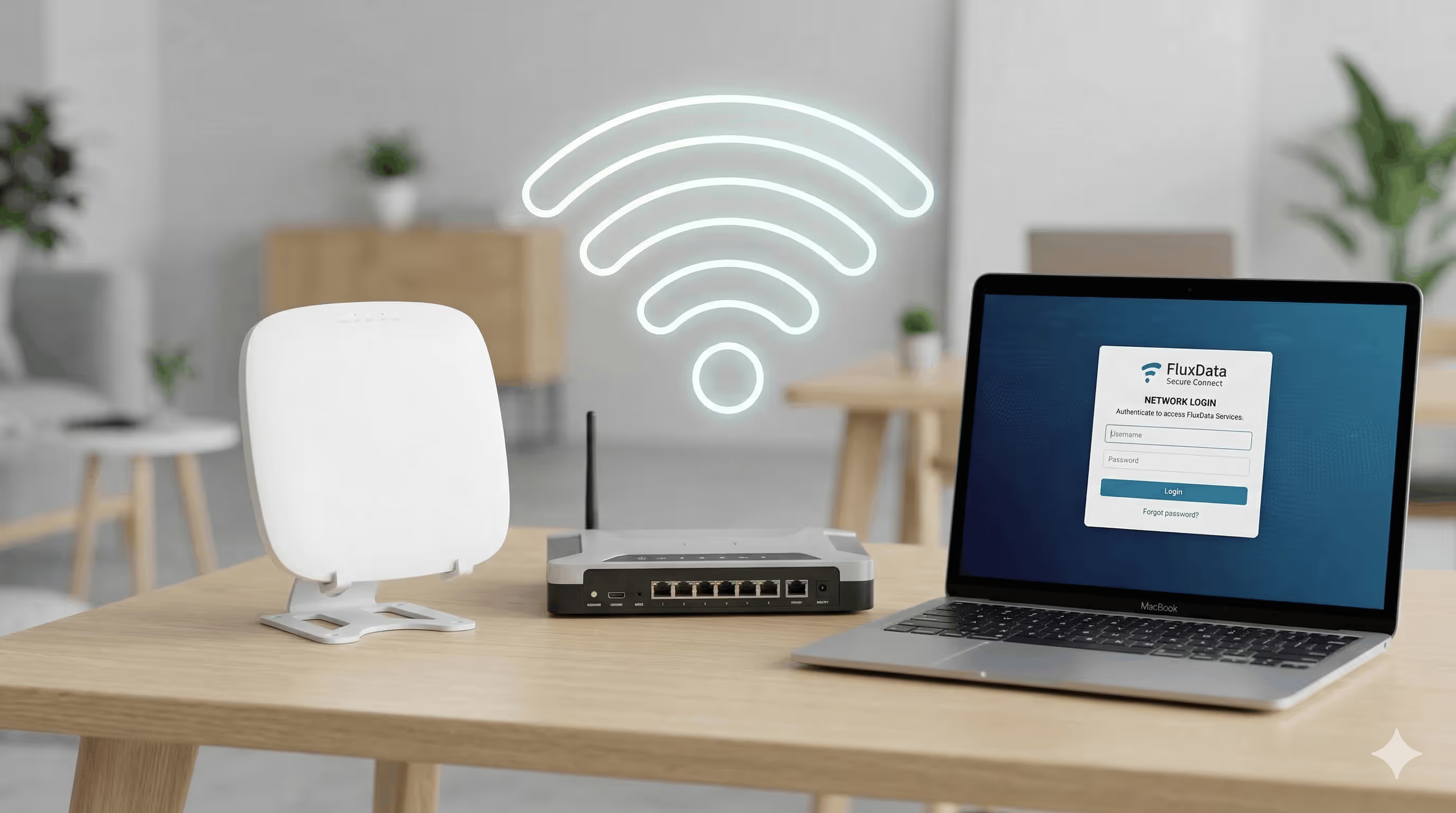
Start by deploying guest WiFi to three to five existing clients who already trust you with their network infrastructure. Use these early deployments to refine your setup process, pricing, and reporting templates.
Once your delivery process is repeatable, introduce guest WiFi during quarterly business reviews (QBRs) with all managed network clients. Frame it as an enhancement to infrastructure they're already paying you to manage, not a new product requiring a separate decision.
Track and share results. When a restaurant client captures 500 new email addresses in their first month, or a hotel generates $800 in premium WiFi revenue, those numbers become your best sales tool for the next client conversation.
Frequently Asked Questions
Do I need to replace my clients' existing routers to offer guest WiFi?
No. Cloud-based captive portal platforms work with the routers your clients already have installed. Platforms like Spotipo support over 30 router brands including UniFi, MikroTik, Meraki, Aruba, Ruckus, and TP-Link Omada. You configure the router to point to the external portal. No firmware changes or hardware replacements needed.
How much can an MSP realistically earn from guest WiFi services?
Revenue depends on your client base size and pricing model. An MSP managing 50 locations at $75 per site per month generates $3,750 monthly ($45,000 annually) in recurring revenue. Add revenue sharing from paid WiFi deployments in hospitality, and the numbers grow further. Because the platform cost per site is typically $15 to $30, margins are strong.
Is guest WiFi compliant with GDPR and data privacy regulations?
Compliance depends on the platform you choose. Look for solutions with built-in consent collection on splash pages, EU-hosted data storage, and automatic privacy policy updates.
What's the difference between guest WiFi and regular WiFi management?
Regular WiFi management focuses on uptime, coverage, and performance. Guest WiFi as a service adds a business layer on top: branded login experiences, data capture, marketing integrations, and monetization. It turns the network from a cost center into a revenue-generating tool for the client, and a recurring revenue line for the MSP.
How do I pitch guest WiFi to clients who already have free WiFi?
Focus on what they're leaving on the table. Every guest connecting to unmanaged WiFi is a missed opportunity to capture an email, display a promotion, or collect feedback. Frame it as upgrading something they already pay for (the network) to do more work for their business.
Can I white-label the guest WiFi platform under my own brand?
Yes, if you choose the right platform. White-label features let you brand splash pages, the admin dashboard, invoices, and even the login page with your company's identity or each client's branding. This keeps the MSP positioned as the solution provider rather than a reseller.
Start Building Your Guest WiFi Revenue Stream
Guest WiFi represents one of the highest-margin, lowest-complexity service additions available to MSPs today. It leverages infrastructure you already manage, solves a problem your clients already have, and generates predictable monthly income that compounds as you add locations.
Ready to explore guest WiFi as a managed service? Start a free trial with Spotipo and see how quickly you can deploy branded captive portals across your client base. No hardware requirements, no contracts, and full white-label capabilities from day one. Check the pricing page or become a partner for volume discounts.


