


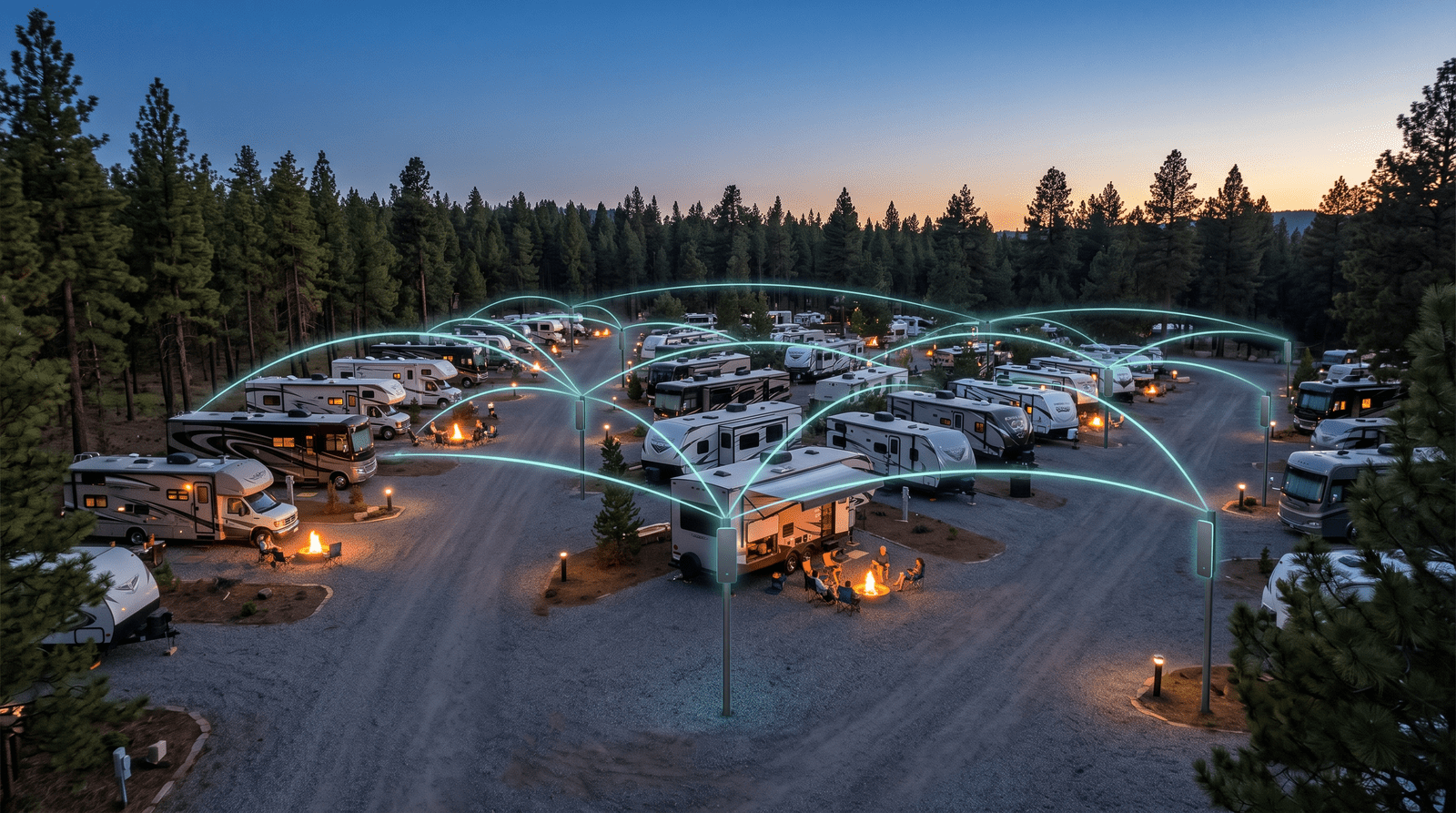
The campground WiFi solutions that work combine outdoor access points, a backhaul connection (fiber, fixed wireless or Starlink) and a captive portal that sells access tiers, issues vouchers at check-in and caps each device's bandwidth. The hardware gets a signal to the campsites, but the software layer is what stops the evening streaming rush from breaking the network and lets paying campers fund your next upgrade.
Ask any park owner about WiFi and you'll hear the same story. The signal reaches the far loop, but by 8pm nobody can load anything. Campers leave reviews about it. And the network that was supposed to be a perk has turned into a cost you can't recover and a complaint you can't fix.
Search for campground WiFi solutions and you'll find hardware vendors, installers quoting site surveys, and campground management software that lists WiFi as a line item. The most useful thing on page one is a UniFi community thread where an operator asks how to run WiFi for 800 to 1,500 users. That's the real question, and it isn't about hardware. It's about who gets on, how much each person can use, and who pays.
This guide covers the software side of RV park WiFi solutions: paid tiers, check-in vouchers, bandwidth caps, Starlink and multi-park management, plus a simple sizing framework for your own numbers.
Why campground WiFi breaks in the evening
RV park WiFi has a problem most venues don't. Everyone gets back to camp at the same time, everyone stays online for hours, and they all want the same thing at the same time: streaming.
During the day, people are out hiking or driving. After dinner, every rig switches on a TV, two phones and a tablet. Your backhaul, the connection between the park and the internet, hasn't changed, but demand has multiplied. Without limits, a few heavy users take most of it and everyone else gets spinning wheels.
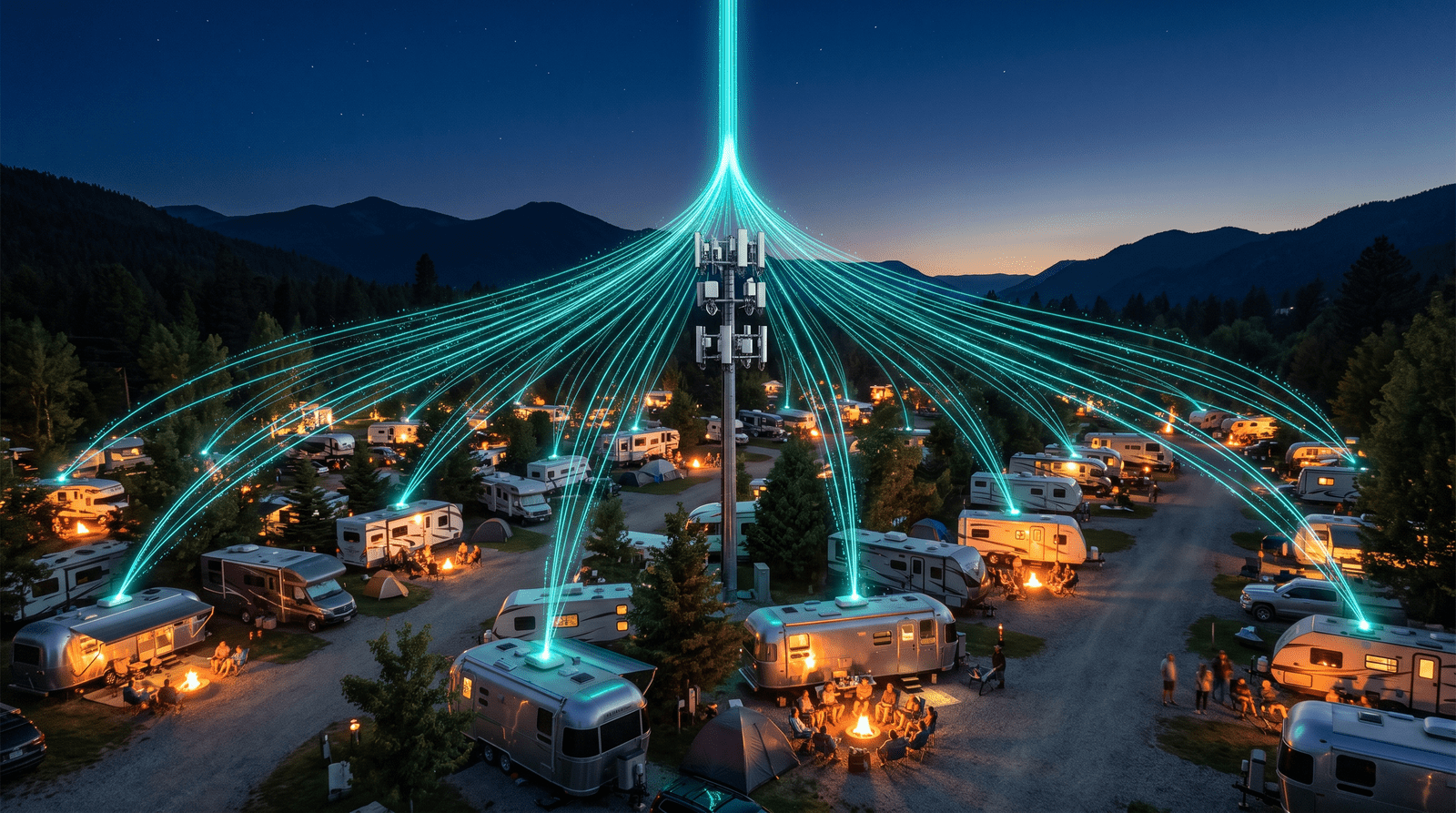
More access points won't fix that. They improve coverage, but they can't create bandwidth your connection doesn't have. What fixes it is deciding how that bandwidth gets shared, which is exactly what a captive portal does. Whether your guests call it RV park WiFi or, if they're from the UK, campsite WiFi, the fix is the same.
Paid tiers: how campground WiFi solutions fund the network
The simplest way to make campground WiFi pay for itself is to stop treating it as one product.
How to charge for WiFi at an RV park
A free tier with a modest speed cap handles messaging, maps, email and weather checks. A paid tier with a higher cap, a longer session or more devices covers streaming and remote work. Campers who just want to check in with family never pay. Campers who want Netflix every evening cover the cost of the line they're using.

In Spotipo, you build these as packages. Each one has its own price, duration, data limit, speed limit and number of devices, and you can put a free package right next to the paid ones on the same splash page. The guide to creating WiFi packages shows every setting.
Payments go through Stripe, so campers pay by card on the login page. The payment-gated hotspot guide covers the Stripe setup, and our paid WiFi setup guide goes through a full configuration.
Two extras help conversion. An automatic upsell email can go out a few minutes before a free session ends. And campers can buy a package before they arrive, which only starts counting down at their first sign-in. That's handy for seasonal guests who book months ahead.
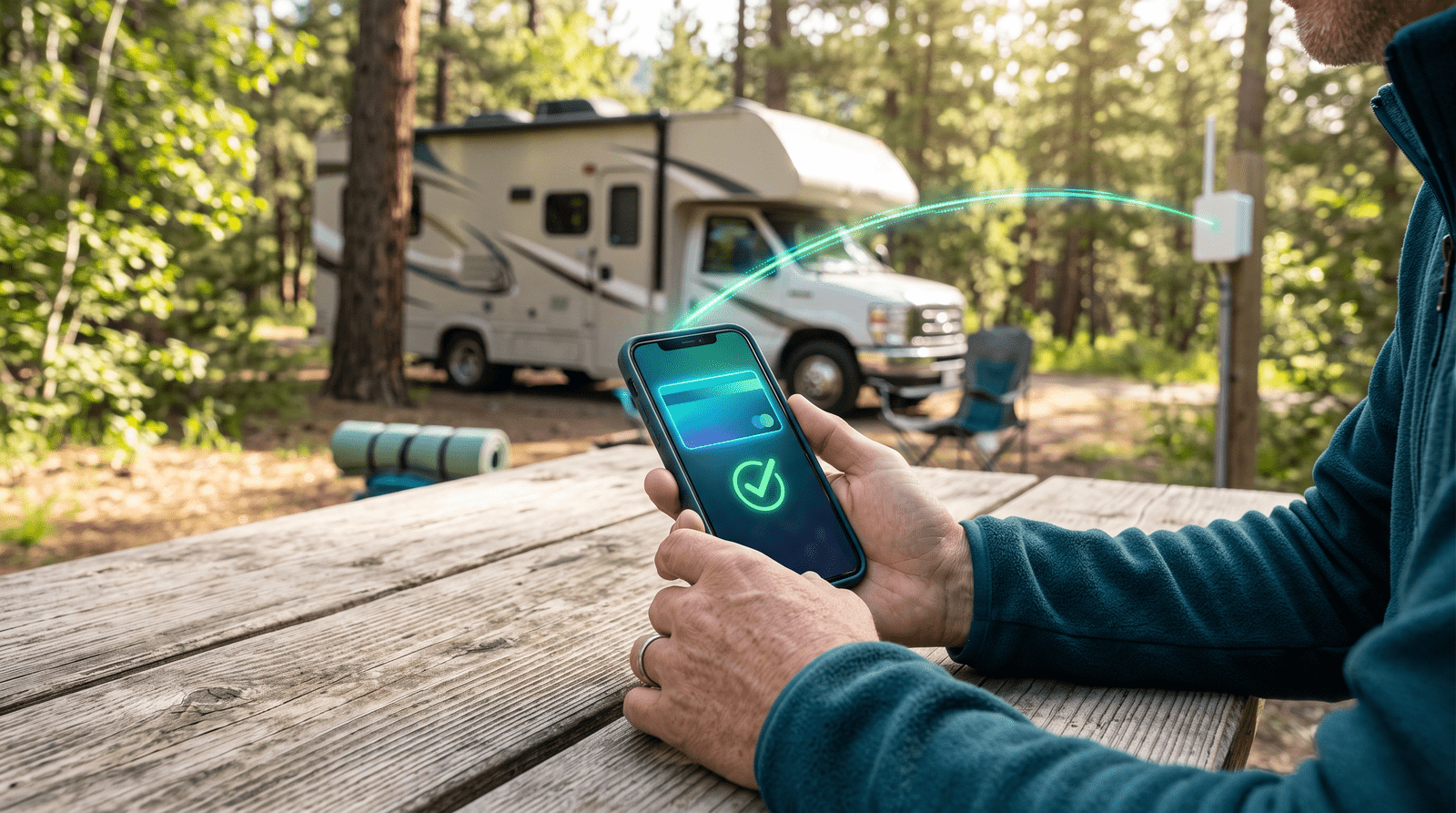
WiFi vouchers for campers, handed out at check-in
Not every park wants card payments on the login page. Some would rather bundle WiFi into the site fee or sell it at the office. That's what vouchers are for.
With voucher login, each camper gets a unique code at check-in. You can print it on the receipt, write it on the site tag, or hand over a card. Each voucher sets how many devices can use it, how long access lasts and what speed comes with it, so a two-night stay and a monthly stay can get different vouchers. You can create them in bulk, extend or disable them from the dashboard, and use custom code strings if you'd rather match codes to site numbers.

Vouchers also solve the neighbor problem. A shared password spreads to day visitors and the farm next door within a week. A voucher that runs out when the stay ends doesn't. See how it works on the voucher WiFi page.
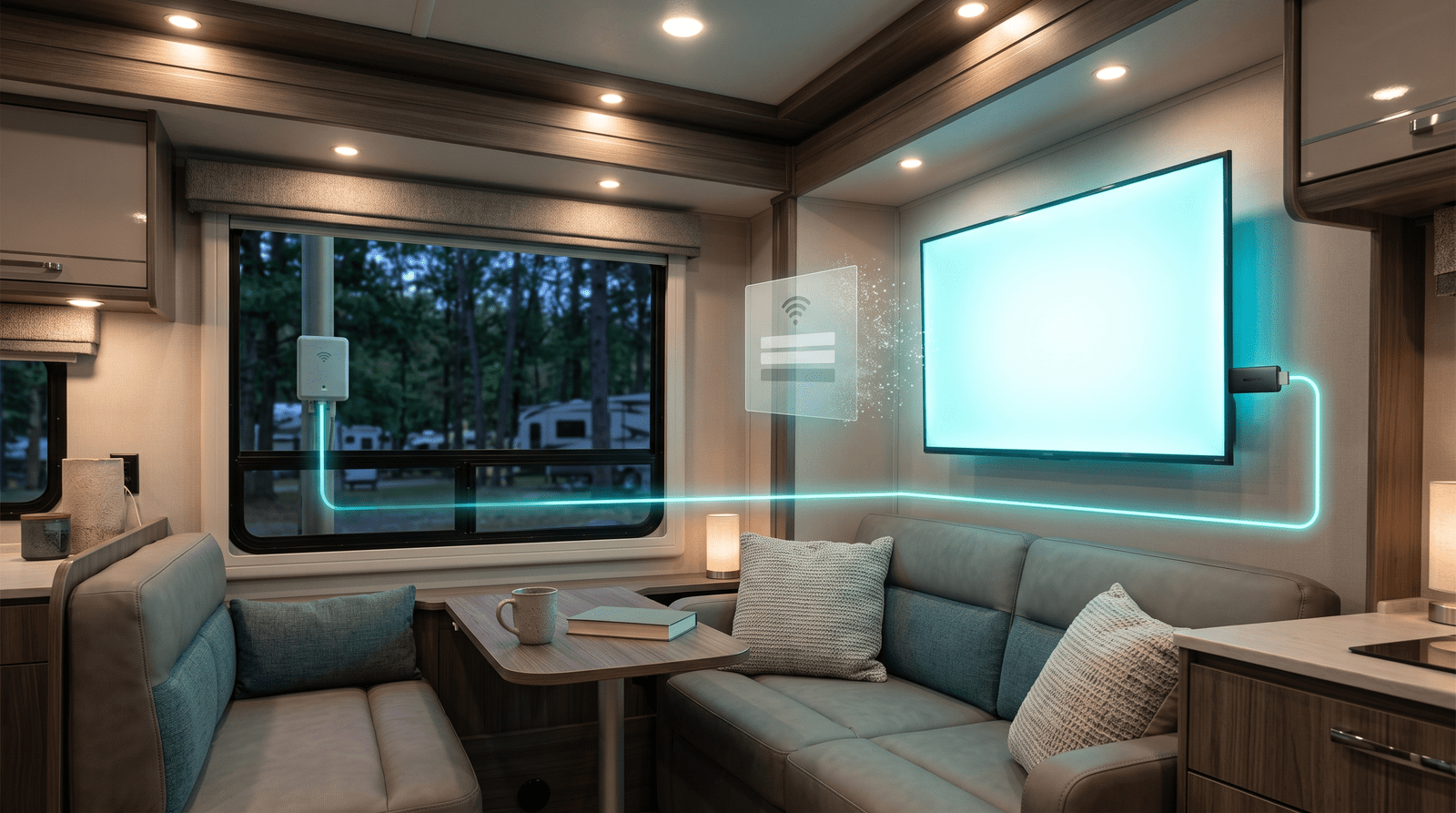
One RV-specific tip. Plenty of rigs carry smart TVs and streaming sticks that can't open a login page. Spotipo lets you allow devices without browsers onto the network, so campers aren't stuck calling the office to get the TV online.
How to limit bandwidth per campsite
This is the part that makes the biggest difference to your reviews.
Every package or voucher carries its own speed limit, and paid packages can carry a data limit too. A free tier might get enough for video calls but not HD streaming, and a paid tier gets more. Session limits stop idle devices from hanging on all night. Our guide to guest WiFi bandwidth limits goes deeper into how to set them.
A simple sizing framework
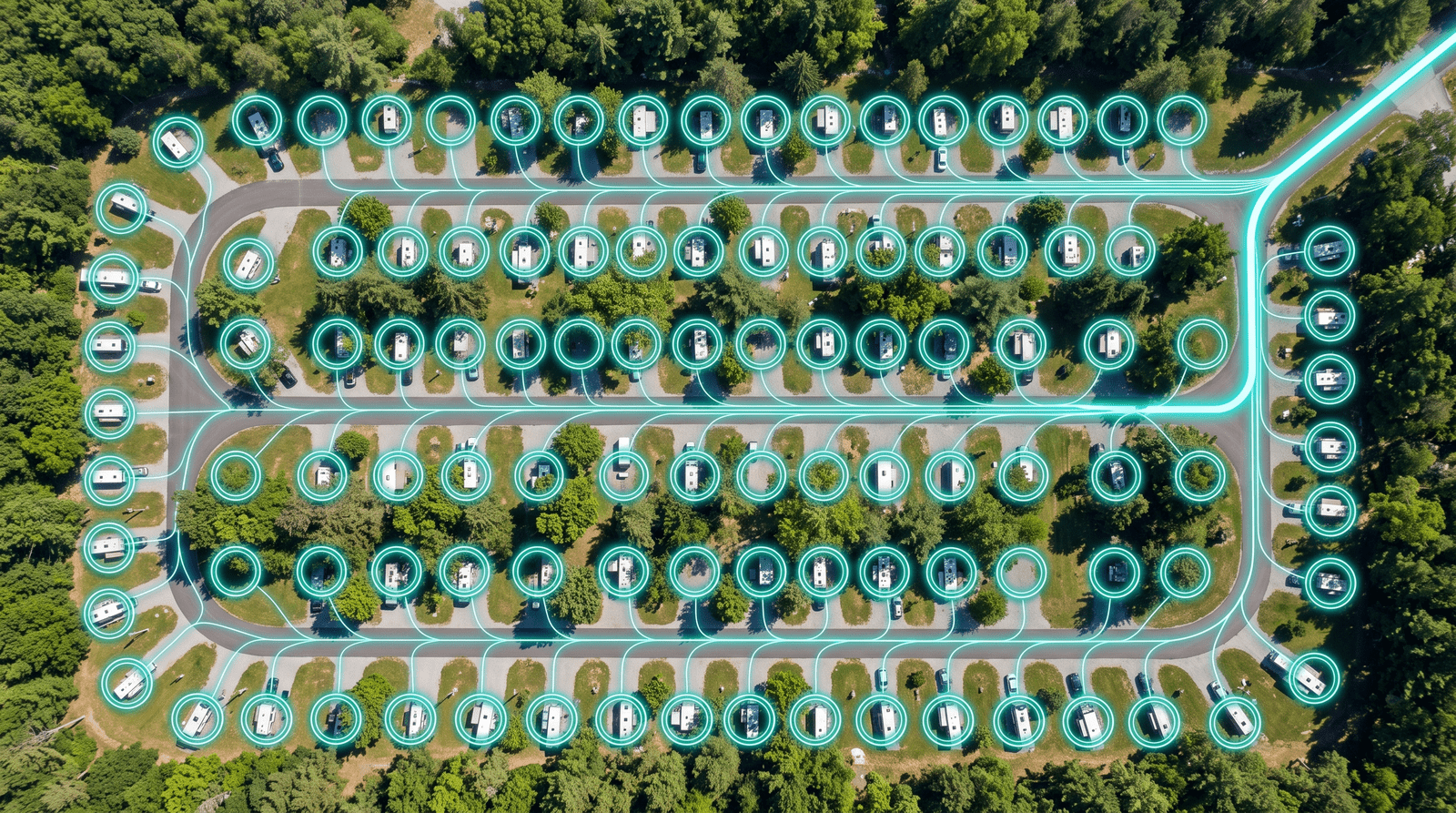
You don't need a consultant to get a first estimate. You need four numbers from your own park.
| Input | What it means | Where to get it |
|---|---|---|
| Sites | Number of sites that can be occupied at once | Your booking system |
| Devices per site | Phones, tablets, laptops and TVs per rig | Watch your controller on a busy weekend |
| Peak share | Share of those devices active in the evening peak | Your controller's client count at 8 to 10pm |
| Per-device cap | The speed limit you set on each tier | Your package settings |
Multiply sites by devices per site by peak share, and you get the number of devices active at peak. Multiply that by the per-device cap and you get peak demand if everyone maxes out. Compare that with your backhaul.
Here's an illustrative example, not a benchmark. Say you have 100 sites, three devices per site, and one in three active at peak. That's 100 active devices. At a 3 Mbps free-tier cap, worst-case demand is 300 Mbps. If your line delivers 200 Mbps, you can lower the free cap, move heavy users to a paid tier, or add capacity. Real demand sits lower, because not every device maxes out at once, but the exercise shows you which lever to pull.
Starlink for campgrounds and remote RV parks
Plenty of parks sit where fiber never will. Starlink has changed that, and it's now a common backhaul for remote campgrounds.
There's a technical catch. Starlink uses dynamic IP addresses behind carrier-grade NAT, so you usually can't reach your network from outside with a fixed address, and many captive portal setups depend on exactly that. Spotipo gets around it with a reverse tunnel, with no static IP or port forwarding needed. Our post on how Spotipo turns Starlink into guest WiFi walks through the setup, and the UniFi external captive portal page covers the integration.
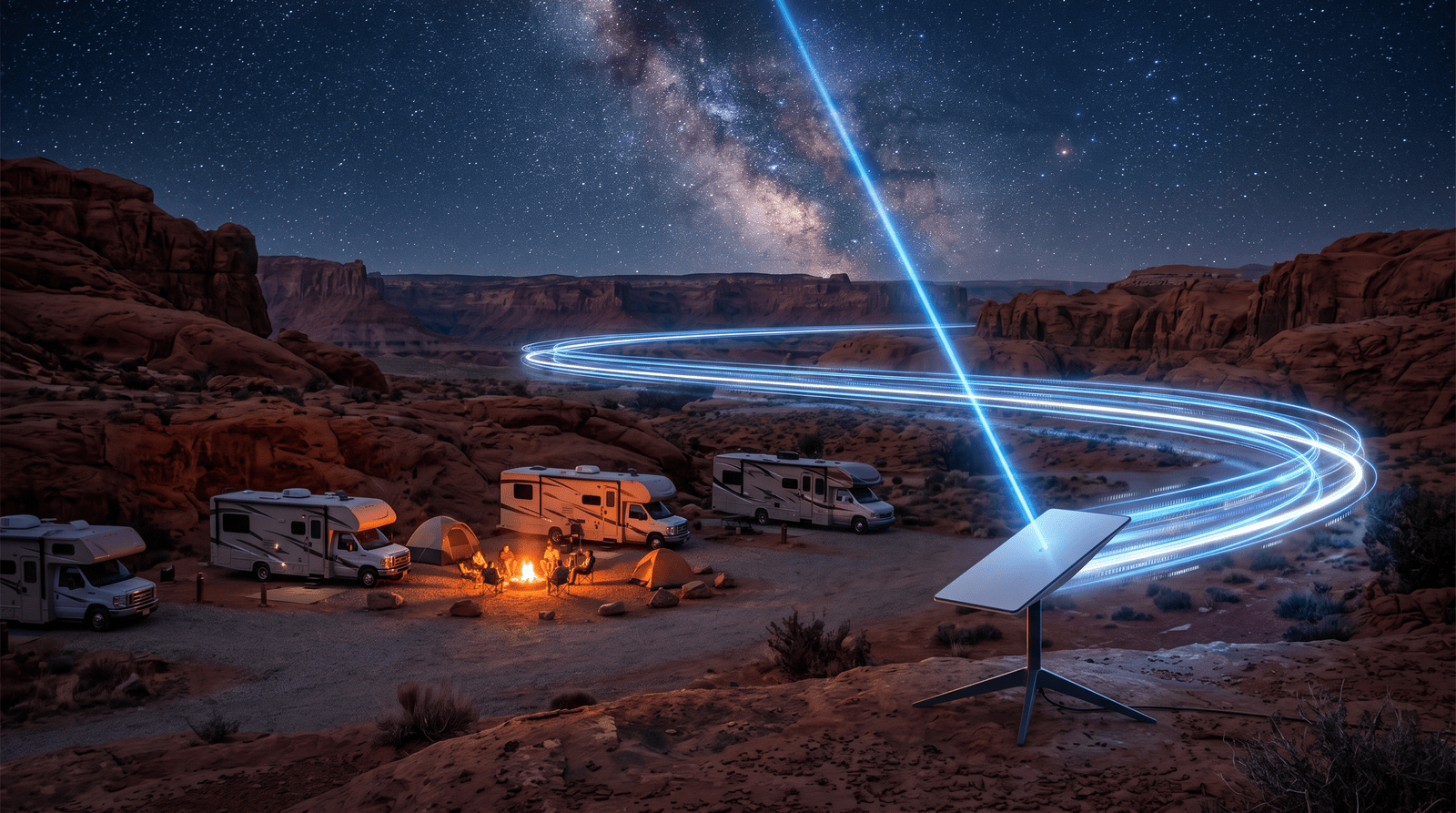
On a satellite link, bandwidth caps stop being optional. Capacity is fixed, and a few unmanaged streams can use all of it. Per-package speed and data limits keep the connection usable for every site.
Managing several parks from one dashboard
If you run more than one park, you shouldn't need a separate login for each. A cloud captive portal gives you one dashboard, while each park keeps its own splash page, packages and guest data.

You can sync a splash page design to new sites instead of rebuilding it every time. Sub-accounts with custom permissions let each park manager handle their own site without touching the others. And multi-site voucher login lets one code work at several locations, which suits membership groups and campers who move between your parks during a trip.
The same setup works for marinas, by the way. Boats at berths behave a lot like rigs at campsites, with long stays, evening peaks and shared backhaul. It's also the approach we describe for busy transport hubs in our airport captive portal guide.
FAQ
What's the best WiFi solution for a campground?
The best campground WiFi solution pairs outdoor access points and a reliable backhaul with a captive portal that controls access and bandwidth. The hardware delivers coverage, and the portal decides who gets on, how fast, and whether they pay.
How do I charge for WiFi at an RV park?
Offer a free tier with a modest speed cap and one or more paid packages with faster speeds, longer sessions or more devices. Campers pay by card on the login page, or you sell vouchers at the office. Paid login through Stripe is included in Spotipo's Pro plan.
Is Starlink good for campgrounds?
Starlink works well as backhaul for remote parks, but the capacity is shared across every camper, so per-device bandwidth caps are essential. Because Starlink uses dynamic IPs behind carrier-grade NAT, you'll also want a captive portal that works without a static IP, like Spotipo with its reverse tunnel.
How do I limit bandwidth per campsite?
Set a speed limit on each WiFi package or voucher, and add a data limit to packages if you need one. Every device on that package gets the same cap, so no single rig can take the whole connection.
Can I give campers WiFi vouchers at check-in?
Yes. Voucher login gives each camper a unique code that controls how many devices can connect, how long access lasts and what speed they get. You can print codes on receipts or site tags, and multi-site vouchers can work across several parks.
Will a captive portal work with my existing campground WiFi hardware?
Probably. Spotipo works with more than 30 router and controller brands, including UniFi, MikroTik, TP-Link Omada, Cisco Meraki and Ruckus, without firmware changes.
Do I need to worry about GDPR with campground WiFi?
If you collect emails or phone numbers from EU guests, yes. Spotipo can show an explicit consent screen before login and stores guest data on Google Cloud in Belgium, inside the EEA.
Make your campground WiFi pay for itself
Most campground WiFi solutions stop at the hardware. Your campers will use the network either way, so the real question is whether it's a cost you absorb or a service that funds its own upgrades.
Spotipo adds paid tiers, check-in vouchers, per-device bandwidth caps and multi-park management to the hardware you already have, including remote parks running on Starlink. You can see plan details on the pricing page.
Start your free 14-day trial at spotipo.com. No credit card needed, and you can have it running before your next busy weekend.


