



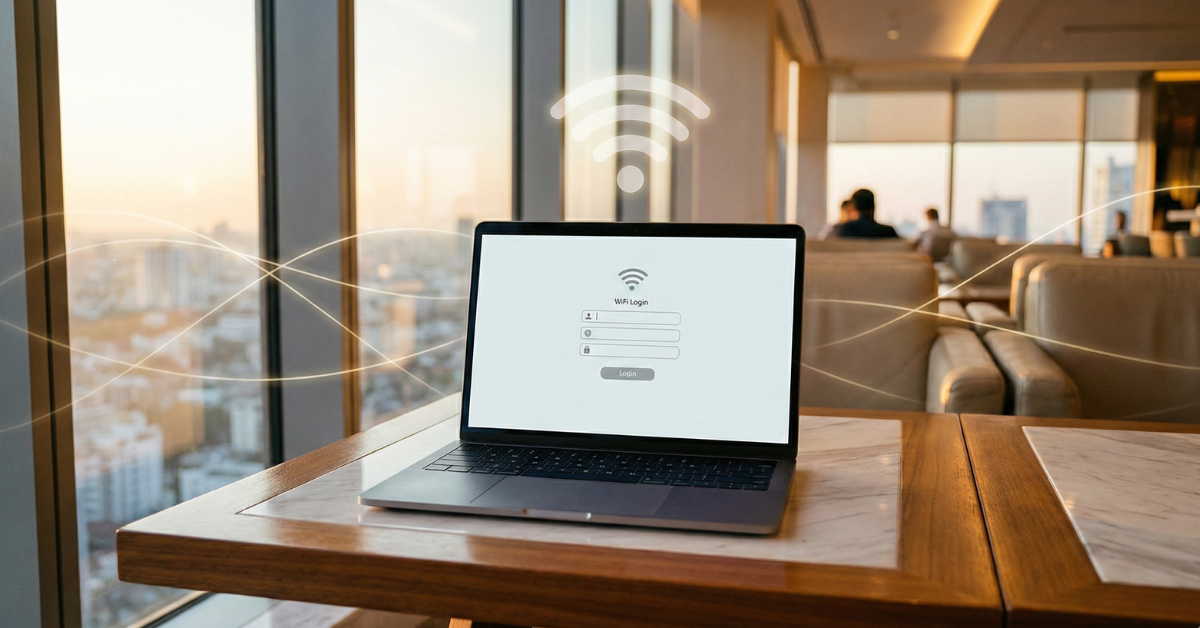
You're evaluating captive portal solutions for your organization. Maybe you're managing network infrastructure for a hotel group, running IT for an airport, or you're an MSP looking to add guest WiFi to your service offering.
In 2026, captive portals are standard infrastructure. The question isn't whether to deploy one - it's how to do it right across multiple sites, with proper compliance, and without creating a support burden for your team.
Here's what you need to know.
Captive Portal Basics
Q: What is a captive portal and how does it work?
It's the authentication layer between your guest network and internet access. When a device connects, it gets redirected to a login page. Once the user completes authentication - entering credentials, accepting terms, providing payment, or entering a voucher code - the system authorizes the MAC address and grants access.
Behind the scenes, the portal handles user data capture, access control policies, session management, bandwidth allocation, and integration with your marketing or CRM systems. A shared password gives you none of this functionality or visibility.
Q: Why is a shared WiFi password a security risk?
The problem with WiFi passwords is that they start off private… and very quickly become public. Someone shares it with a colleague. Someone posts it online. A contractor keeps it six months after leaving. And now your "secure" network is just a rumor.
You have no audit trail of who accessed your network or when. No documented terms acceptance. No way to demonstrate who agreed to your acceptable use policy. No mechanism to revoke individual access without changing credentials for everyone.
If someone abuses your network, your only option is a full password reset - affecting all legitimate users.
A password feels simpler. The operational and compliance costs say otherwise.
Q: What's the difference between free and paid captive portal solutions?
You can deploy a free one. Here's the reality.
Open-source captive portal projects are typically maintained by small teams or individual developers. When something breaks in production - and it will - you're debugging it yourself or waiting for community support. That's not viable when guests can't connect and operations is asking why the WiFi is down.
Free solutions also lack enterprise integrations. No native connection to Mailchimp, Klaviyo, HubSpot, Salesforce, or your CRM. You're writing custom scripts or manually exporting data - work that doesn't get done consistently at scale.
Compliance is another gap. GDPR requires documented consent mechanisms, data retention policies, and deletion workflows. Free tools rarely implement these properly. That's your organization's liability.
Free works for a proof of concept. It doesn't work for production infrastructure you need to rely on.
Guest WiFi User Experience

Q: How do I optimize captive portal login for mobile users?
A poorly implemented portal creates friction, support tickets, and complaints. A well-implemented one is invisible - users complete authentication without thinking about it.
It should load fast. It should ask for as little as possible. And it should look good on a phone - because that's where over 90% of guest WiFi connections happen.
Page load time needs to be under two seconds. Anything slower and users start refreshing, abandoning, or calling your help desk. Collect email only, or implement one-click terms acceptance. If you need more data, capture it through post-authentication surveys.
Configure sessions for 24-72 hours minimum. Forcing re-authentication every few hours generates complaints and support load. The system should remember returning devices. And test on iOS, Android, Windows, and Mac - each platform handles captive portal detection differently.
The benchmark in 2026 is single-field authentication that completes in under 10 seconds. Users should be online before they've thought about it.
Q: What are the benefits of captive portals for guests?
Guest WiFi authentication isn't just about your organization extracting data. Users get tangible benefits too.
A branded authentication page confirms they're connecting to your legitimate network, not a spoofed SSID set up for credential harvesting. This matters - WiFi spoofing attacks are common in hotels, airports, and conference venues.
Because you can enforce bandwidth policies and usage limits, individual users can't degrade the experience for everyone else. Your network performs consistently. And returning users are recognized automatically - they connect faster than they would with a password they'd have to remember or look up.
Industry Solutions
Q: How do hotel groups use captive portals for marketing?
Hotel chains use captive portals as integrated guest experience and marketing infrastructure.
Every authentication captures contact information that flows into CRM systems. Post-stay marketing campaigns drive direct bookings without OTA commission - a significant cost saving at scale. The splash page promotes spa services, restaurant reservations, room upgrades, and ancillary offerings. This is high-visibility placement reaching every connected guest.
Tiered access creates another revenue line. Basic complimentary WiFi handles casual use. Premium tiers with guaranteed bandwidth target business travelers who need reliable video conferencing.
For hotel groups managing multiple properties, corporate maintains centralized oversight, analytics, and policy control while individual properties manage their own branding and promotions. Both operate from the same platform without stepping on each other.
And because hotel groups acquire properties with existing network infrastructure, hardware flexibility matters. A captive portal solution that works with UniFi, MikroTik, Meraki, Aruba, Ruckus, Cisco, and other major vendors means you're not forcing hardware replacements just to standardize guest WiFi.
Q: How do cruise ships manage WiFi when satellite bandwidth is limited and expensive?
Maritime operators face a unique constraint: satellite bandwidth is expensive and strictly limited. Without controls, a single passenger streaming or torrenting can consume capacity needed by thousands of others.
The solution is layered. Free tier limited to messaging applications. Paid tiers for social media, streaming, or unrestricted access. WiFi becomes a revenue center rather than a cost line.
Hard usage caps give each passenger account a daily data allocation. When it's consumed, access stops or degrades. Per-user throttling caps maximum bandwidth per connection, so heavy users get acceptable speeds without impacting everyone else.
Class-based entitlements mean suite passengers receive complimentary premium access while standard cabins get basic tier with upgrade options. The portal enforces these rules automatically based on booking data integration.
For maritime operators in 2026, passenger WiFi expectations are non-negotiable. The question is whether it's a budget drain or a contributor to per-passenger revenue.
Q: How do airports handle terminal-wide access and lounge management?
Airports are complex environments - multiple stakeholders with different requirements sharing common infrastructure.
Terminal-wide public access is typically managed by the airport authority. Speed and simplicity are priorities - one-click terms acceptance gets travelers online immediately. Tiered access offers free basic connectivity with paid premium options. Advertising on the splash page monetizes traffic from car rental companies, hotels, and ground transportation providers.
Airline lounges and independent lounges require premium connectivity with controlled access. The captive portal distinguishes members from day-pass purchasers, processes payments, enforces session limits, and can upsell premium services.
Individual retailers and food service operators may want their own guest WiFi with separate branding and data capture. The platform needs to support this without creating management overhead for the airport authority.
The airport authority requires consolidated reporting and oversight. Individual tenants require operational autonomy. A properly architected solution delivers both.
Starlink and Remote Operations
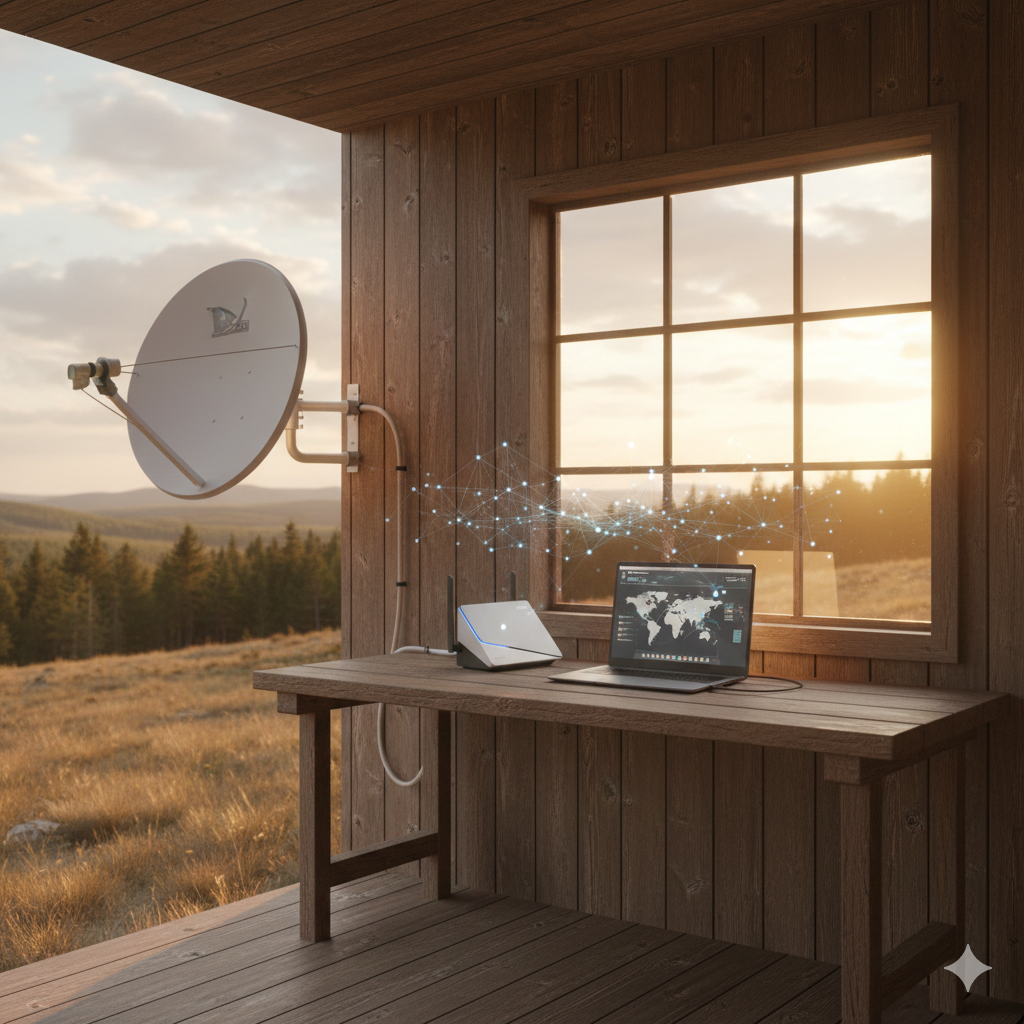
Q: How do I set up a captive portal with Starlink when there's no static IP?
This comes up a lot - especially for remote operations like construction sites, rural facilities, agricultural operations, and mobile deployments.
The technical constraint is that Starlink uses carrier-grade NAT with no static IP address. Most captive portal architectures require inbound connectivity from the cloud to your router, which fails without a fixed IP.
The solution is reverse tunnel architecture - your router establishes an outbound connection to the cloud and maintains it persistently. Spotipo supports this natively. Many competitors don't support it, charge extra, or leave you to implement it yourself.
Organizations running on Starlink need bandwidth controls more than anyone. Satellite capacity is expensive and limited. A captive portal with voucher-based access and data caps keeps usage manageable. Issue employees daily or weekly allocations. When it's consumed, access stops until the next period. No surprise overage charges. No dead connectivity mid-day because someone's device auto-downloaded a large update.
MSPs and Resellers
Q: How can MSPs offer guest WiFi as a managed service?
This is one of the fastest-growing deployment models.
Full white-label capability means clients see your branding throughout - splash pages, admin dashboards, invoices, login screens. Your brand, your client relationship. The underlying platform is invisible to them.
Multi-tenant management gives you a master dashboard with visibility across all clients and all locations. Clients see only their own properties. You can configure, troubleshoot, and update without requesting access each time.
Because the platform works with 30+ router and access point vendors - UniFi, MikroTik, Meraki, Aruba, Ruckus, Omada, Cisco, and others - you're not forcing a hardware sale to deliver the service. Clients keep their existing network infrastructure.
Guest WiFi management becomes a monthly service line. Clients get professional captive portal infrastructure, data capture, analytics, and compliance. You get predictable recurring revenue from a service that requires minimal ongoing attention once deployed.
For MSPs already managing client network infrastructure, this is a natural extension. The network access is already there - you're monetizing a capability that exists but isn't being used.
Multi-Location Management
Q: How do I manage guest WiFi across multiple locations from one dashboard?
This is where purpose-built captive portal platforms differentiate from DIY approaches.
Global policies, branding templates, and compliance settings are managed centrally. Individual sites customize their splash pages, promotions, and operational settings within those guardrails.
Role-based access means corporate administrators see everything, regional managers see their territory, and property-level staff see only their location. Everyone works in the same system with appropriate visibility.
Hardware diversity support matters when you're dealing with acquired properties or client sites. Working with 30+ router vendors means you don't need to standardize hardware just to get consistent guest WiFi management.
Guest data, usage analytics, and compliance records aggregate across the portfolio. Export to your data warehouse or BI tools as needed.
Compliance
Q: How does a captive portal handle GDPR?
GDPR doesn't care whether you're a hotel or a hospital. If you collect personal data, you're responsible for it.
A good captive portal doesn't make this harder - it automates it. Consent checkboxes presented before data collection. Privacy policy links. Timestamped consent records. Data management workflows.
Spotipo is EU-hosted with GDPR compliance built into the platform architecture. Consent mechanisms are native to the authentication flow, not afterthoughts.
Here's the irony: informal data collection - paper forms, verbal requests - is actually harder to make compliant. There's no audit trail, no timestamps, no documented consent. Digital capture with proper consent mechanisms is the cleaner compliance path.
Next Steps
A captive portal isn't software you install once. It's infrastructure you live with.
Test it in real conditions. Put real guests on it. See what breaks.
Because WiFi isn't an IT feature anymore. It's part of your reputation.
If you want to try Spotipo, you can test it free for 14 days on your existing hardware at spotipo.com.


